

The los angeles chargers vs las vegas raiders match player stats from September 20, 2026, tell the story of a divisional game that turned on quarterback efficiency, explosive passing plays, and costly turnovers. The Las Vegas Raiders defeated the Los Angeles Chargers 26 to 14 at SoFi Stadium in Inglewood, California, earning a valuable AFC West victory.
Raiders quarterback Kirk Cousins delivered one of the game’s strongest performances, completing 19 of 29 passes for 253 yards, three touchdowns, and one interception. Wide receiver Tre Tucker caught five passes for 119 yards and a touchdown, while Cody White caught two touchdown passes.
For the Chargers, Justin Herbert completed 15 of 27 passes for 192 yards, one touchdown, and two interceptions. Running back Omarion Hampton rushed for 94 yards and a touchdown on 23 carries, but his late fumble helped Las Vegas protect its lead.
The final score does not tell the entire story. Los Angeles briefly took the lead in the third quarter before the Raiders responded with two touchdown drives and a safety. Here is a complete breakdown of the final score, player statistics, scoring plays, and the performances that decided the game.
Los Angeles Chargers vs Las Vegas Raiders Final Score
The Raiders won 26 to 14 after a competitive first three quarters. Neither team scored in the opening quarter, but Las Vegas gradually gained control through its passing attack and stronger execution in key moments.
| Game detail | Result |
|---|---|
| Date | September 20, 2026 |
| Stadium | SoFi Stadium |
| Location | Inglewood, California |
| Final score | Raiders 26, Chargers 14 |
| Winning team | Las Vegas Raiders |
| Losing team | Los Angeles Chargers |
| Raiders quarterback | Kirk Cousins |
| Chargers quarterback | Justin Herbert |
Las Vegas improved to 2 and 0, while Los Angeles fell to 0 and 2 after the opening two weeks of the regular season.
The Raiders produced 10 points in the second quarter, seven in the third, and nine in the fourth. The Chargers scored seven points in both the second and third quarters but failed to score in the fourth.
The difference came late. After Los Angeles had an opportunity to respond, Hampton lost a fumble near midfield. The Raiders recovered the ball and used the turnover to set up another touchdown. A safety against the Chargers added two more points to the final margin.
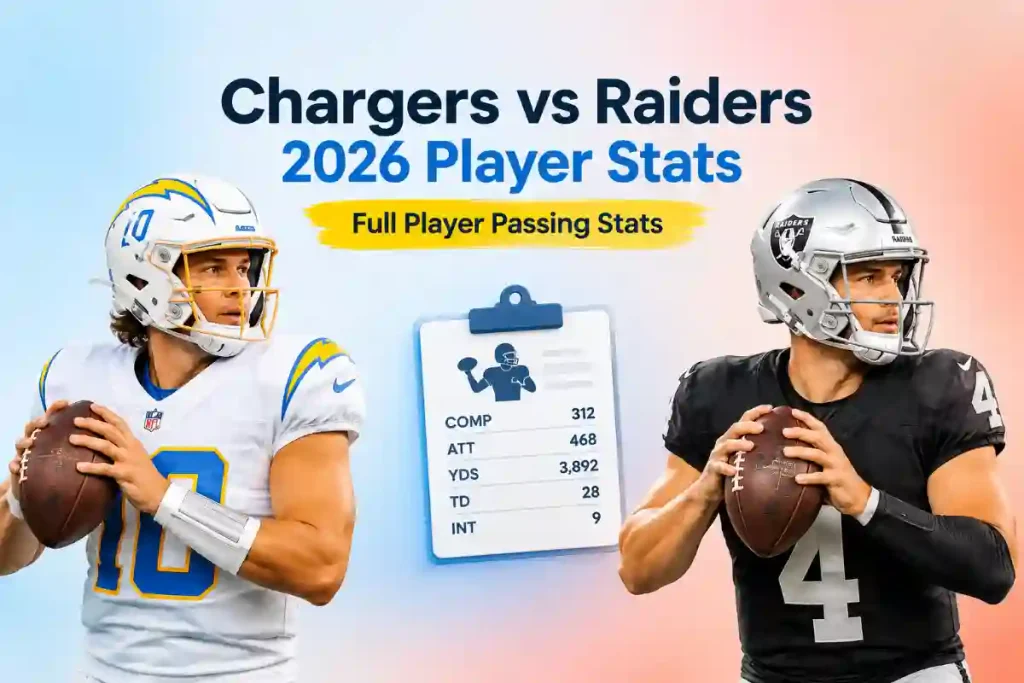
Full Player Passing Stats
Quarterback play was one of the biggest differences between the teams. Cousins threw three touchdown passes and helped Las Vegas convert important opportunities into points. Herbert had a productive passing day in terms of yardage but struggled with turnovers.
| Passing stat | Kirk Cousins | Justin Herbert |
|---|---|---|
| Team | Raiders | Chargers |
| Completions | 19 | 15 |
| Pass attempts | 29 | 27 |
| Completion percentage | 65.5% | 55.6% |
| Passing yards | 253 | 192 |
| Passing touchdowns | 3 | 1 |
| Interceptions | 1 | 2 |
| Sacks taken | 2 | 3 |
| Passer rating | 113.1 | 59.5 |
Kirk Cousins Player Stats
Cousins finished with 253 passing yards, three touchdown passes, and one interception. His 19 completions on 29 attempts gave him a completion rate of approximately 65.5%.
The veteran quarterback also delivered touchdowns at important moments. He connected with Tucker on a 40 yard scoring play in the second quarter before finding Cody White for two touchdowns in the second half.
His performance showed the value of making accurate throws when opportunities appear. Cousins did not need an unusually high number of attempts to produce three passing touchdowns. He made his opportunities count and helped the Raiders turn good field position into points.
Cousins did throw an interception, so his performance was not flawless. However, the three touchdown passes outweighed that mistake and helped Las Vegas maintain control when the Chargers threatened to take over.
Justin Herbert Player Stats
Herbert finished with 192 passing yards, one touchdown, and two interceptions. He completed 15 of his 27 attempts, producing a completion rate of about 55.6%.
His touchdown pass to tight end Oronde Gadsden II temporarily put Los Angeles ahead in the third quarter. Herbert also connected with Tre Harris on a 53 yard reception, one of the Chargers’ biggest offensive plays of the game.
The problem was consistency. Herbert threw an interception during the first half and another during the second half. Those mistakes made it harder for Los Angeles to sustain drives and keep pace with the Raiders.
Herbert’s numbers do not mean he was responsible for every offensive problem. Protection, route execution, defensive pressure, and situational play calling all influence quarterback performance. Still, the two interceptions were a major difference between the two passing lines.
Rushing Stats for Both Teams
The ground game provided a different picture from the passing statistics. Hampton was one of the Chargers’ most productive offensive players, finishing with 94 rushing yards and a touchdown.
| Rushing stat | Omarion Hampton | Ashton Jeanty |
|---|---|---|
| Team | Chargers | Raiders |
| Rushing attempts | 23 | 21 |
| Rushing yards | 94 | 48 |
| Average yards per carry | 4.1 | 2.3 |
| Rushing touchdowns | 1 | 0 |
| Longest rush | 17 yards | 9 yards |
| Fumbles | 1 | 0 |
Omarion Hampton Leads the Chargers
Hampton carried the ball 23 times for 94 yards, averaging approximately 4.1 yards per attempt. He scored the Chargers’ first touchdown with a one yard run in the second quarter.
His workload showed how important the running game was to Los Angeles. The Chargers used him to move the chains, reduce pressure on Herbert, and create more balanced offensive possessions.
Hampton continued to contribute after halftime, and his production helped Los Angeles take a brief lead in the third quarter. However, his late fumble became a turning point.
The turnover occurred after the Chargers had crossed midfield. Las Vegas recovered the loose ball and converted the opportunity into a touchdown, making it much harder for Los Angeles to mount a comeback.
Hampton’s rushing production was strong, but the late mistake demonstrated why ball security matters as much as yardage in a close game.
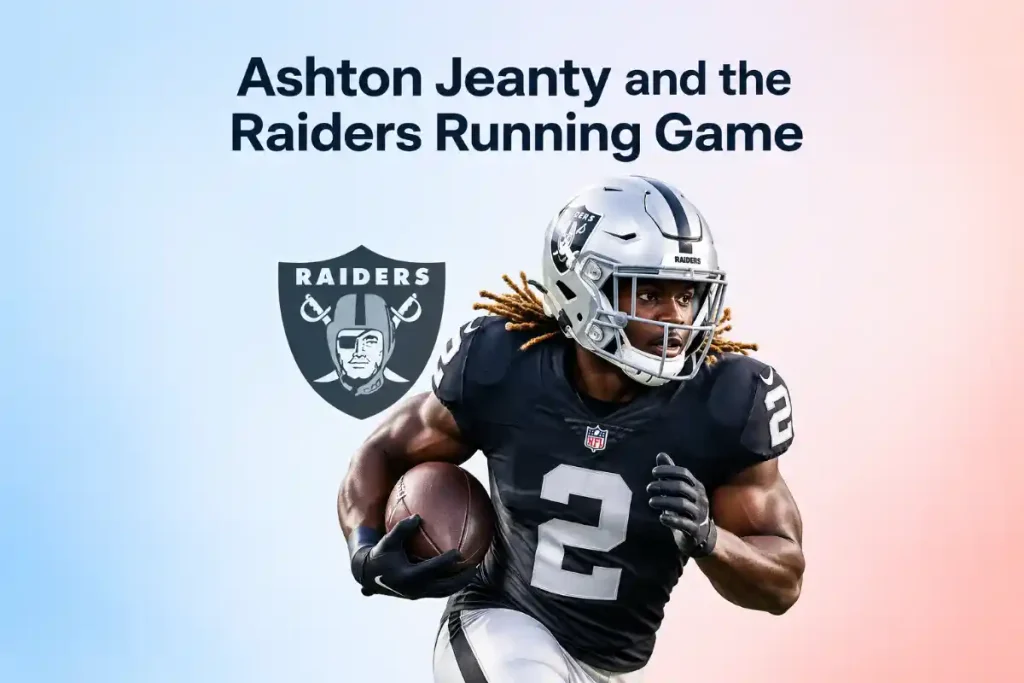
Ashton Jeanty and the Raiders Running Game
Jeanty carried the ball 21 times for 48 yards, averaging about 2.3 yards per attempt. He did not score a rushing touchdown.
Those numbers were less impressive than Hampton’s, but the Raiders still found ways to score through their passing game. Cousins’ three touchdown passes allowed Las Vegas to win without producing a dominant rushing performance.
Jeanty also contributed four receptions for 15 yards. His involvement in the passing game gave the Raiders another way to move the ball when running lanes were limited.
The key lesson from the matchup is that a team does not always need to win the rushing battle to win the game. Las Vegas compensated for its modest rushing output with explosive passes, efficient red zone execution, and defensive takeaways.
Receiving Stats and Top Performers
The receiving statistics reveal why the Raiders’ passing attack was so effective. Tucker produced the game’s most productive receiving performance, while White caught both of Cousins’ second half touchdown passes.
The Chargers also had several notable contributions, particularly from Harris and Ladd McConkey.
| Player | Team | Targets | Receptions | Receiving yards | Touchdowns |
|---|---|---|---|---|---|
| Tre Tucker | Raiders | 7 | 5 | 119 | 1 |
| Cody White | Raiders | 2 | 2 | 24 | 2 |
| Dareke Young | Raiders | 1 | 1 | 27 | 0 |
| Jack Bech | Raiders | 2 | 2 | 25 | 0 |
| Michael Mayer | Raiders | 4 | 3 | 23 | 0 |
| Tre Harris | Chargers | 3 | 1 | 53 | 0 |
| Ladd McConkey | Chargers | 3 | 3 | 35 | 0 |
| Oronde Gadsden II | Chargers | 2 | 2 | 18 | 1 |
| Charlie Kolar | Chargers | 3 | 3 | 21 | 0 |
| Quentin Johnston | Chargers | 5 | 1 | 7 | 0 |
Tre Tucker’s 119 Receiving Yards
Tucker was the leading receiver in the game. He caught five passes for 119 yards and a touchdown, averaging 23.8 yards per reception.
His biggest contribution came in the second quarter, when he caught a 40 yard touchdown pass from Cousins. That play gave Las Vegas a 7 to 0 lead and demonstrated the Raiders’ ability to create explosive gains through the air.
Tucker’s production was especially valuable because the Raiders did not rely on a large volume of short completions to build their passing total. His ability to gain substantial yardage on each catch helped stretch the Chargers’ defense.
He also gave Cousins a dependable downfield target. When a receiver can turn a limited number of catches into more than 100 yards, the offense can score quickly without needing to sustain long drives.
Cody White Scores Two Touchdowns
White caught two passes for 24 yards, and both receptions resulted in touchdowns. His first scoring catch covered 13 yards in the third quarter, while his second covered 11 yards in the fourth.
White’s production highlights an important point about football statistics: receiving yards alone do not tell the full story. Tucker led in yardage, but White delivered two of the game’s most valuable plays.
Both touchdowns helped the Raiders regain control after Los Angeles briefly moved ahead. His ability to finish plays in the scoring area gave Cousins another reliable option when the offense needed points.
Tre Harris Creates a Big Play
Harris made one of the Chargers’ most impressive individual plays by catching a pass from Herbert and gaining 53 yards. He finished with one reception for 53 yards on three targets.
That catch moved Los Angeles deep into Raiders territory and gave the Chargers a chance to produce a major scoring drive. Although Harris did not record a touchdown, his long reception was a valuable contribution.
His performance also showed that the Chargers could create explosive plays even when the passing offense struggled overall. The challenge was turning those opportunities into sustained scoring production.
Ladd McConkey and Oronde Gadsden II
McConkey caught all three of his targets for 35 yards. His reliable hands helped Los Angeles move the ball, although he did not score.
Gadsden caught two passes for 18 yards, including the 10 yard touchdown that briefly gave the Chargers a 14 to 10 lead in the third quarter.
That score was an important moment because it showed Los Angeles could respond to the Raiders’ early advantage. However, the Chargers could not maintain the lead, and Las Vegas answered with a touchdown of its own.
Scoring Summary by Quarter
The scoring sequence explains how the game moved from a close contest to a comfortable Raiders win.
| Quarter | Raiders | Chargers |
|---|---|---|
| First | 0 | 0 |
| Second | 10 | 7 |
| Third | 7 | 7 |
| Fourth | 9 | 0 |
| Final | 26 | 14 |
First Quarter
Neither team scored in the opening quarter. Both defenses made it difficult to establish an early advantage, and the game remained scoreless heading into the second period.
The slow start made the second quarter especially important. Las Vegas eventually found its rhythm through the passing game, while Los Angeles responded with a rushing touchdown.
Second Quarter
Tucker opened the scoring with a 40 yard touchdown reception from Cousins. Hampton then tied the game with a one yard rushing touchdown for the Chargers.
The Raiders added a 59 yard field goal by Matt Gay with four seconds remaining in the half, giving Las Vegas a 10 to 7 lead at halftime.
Gay’s kick was a significant contribution because it put the Raiders ahead despite the Chargers’ ability to match their touchdown.
Third Quarter
The Chargers came out of halftime with a productive drive. Herbert connected with Gadsden for a 10 yard touchdown, putting Los Angeles ahead 14 to 10.
The Raiders responded with a 13 yard touchdown pass from Cousins to White. Las Vegas regained the lead at 17 to 14 and carried that advantage into the fourth quarter.
Fourth Quarter
White scored again on an 11 yard pass from Cousins, extending the Raiders’ lead to 24 to 14.
Hampton’s late fumble helped Las Vegas secure the result. A safety following a holding penalty against the Chargers in their own end zone added two more points, producing the final score of 26 to 14.
Team Stats and Game Analysis
The player statistics show how the game unfolded, but the broader story involves execution, turnovers, and the ability to finish scoring opportunities.
Las Vegas won through its passing efficiency and ability to capitalize on mistakes. The Raiders scored three passing touchdowns and forced the Chargers to recover from multiple setbacks.
Los Angeles had a productive rushing performance from Hampton and generated a few explosive passing plays. However, two Herbert interceptions and Hampton’s fumble made it difficult to maintain offensive momentum.
Quarterback Efficiency
Cousins completed a larger percentage of his passes, threw for more yards, and recorded more touchdowns. His 113.1 passer rating compared with Herbert’s 59.5 rating reflects the difference in their statistical output.
Passer rating is not a complete measure of quarterback performance, but it provides a useful summary of completion rate, yards per attempt, touchdowns, and interceptions.
Cousins also benefited from strong contributions by Tucker and White. The receivers converted their opportunities into big gains and touchdowns, allowing the Raiders to make the most of their passing possessions.
Turnovers Changed the Outcome
Turnovers were one of the clearest differences between the teams. Cousins threw one interception, while Herbert threw two. The Chargers also lost a fumble late in the game.
Those mistakes gave Las Vegas additional opportunities and prevented Los Angeles from building sustained momentum. The late fumble was particularly damaging because it occurred while the Chargers were trying to get back into the contest.
Teams can overcome a turnover or two, but doing so becomes more difficult when the opponent converts those mistakes into touchdowns.
Red Zone Execution
The Raiders converted their passing opportunities into touchdowns at important moments. White’s two scoring catches demonstrated how effectively Las Vegas finished drives in the red zone.
The Chargers also produced touchdowns through Hampton and Gadsden, but they failed to score in the fourth quarter. Their inability to respond after falling behind was a major factor in the final result.
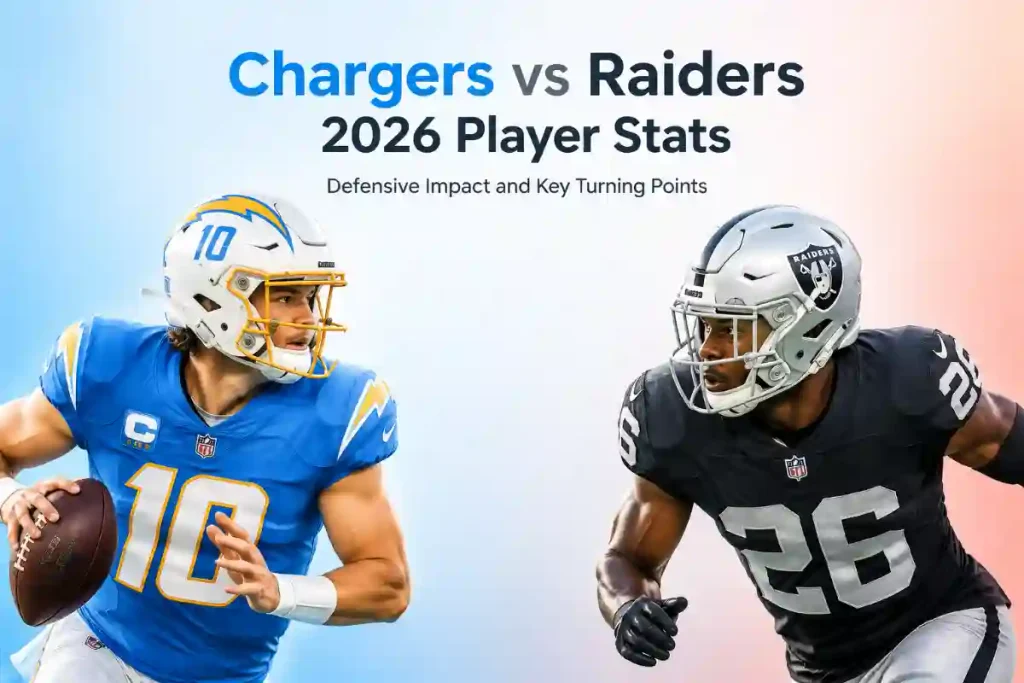
Defensive Impact and Key Turning Points
The offensive statistics deserve much of the attention, but defense also shaped the outcome.
Las Vegas did not need to completely shut down the Chargers. Instead, the Raiders made enough stops to prevent Los Angeles from keeping pace and capitalized when the Chargers made mistakes.
The defense helped limit the Chargers’ passing output to 192 yards and pressured Herbert into difficult situations. The two interceptions also put the Raiders in a stronger position to control the game.
The late fumble recovery was the most important defensive turning point. Nakobe Dean forced the ball loose, and Jeremy Chinn recovered it for Las Vegas. The turnover helped set up White’s second touchdown and put the game beyond the Chargers’ reach.
For Los Angeles, the defensive challenge was containing Cousins and preventing big passing plays. Tucker’s 40 yard touchdown demonstrated the cost of allowing an explosive reception, while White’s two scoring catches showed how difficult it was to stop the Raiders near the goal line.
What the Match Stats Mean for Both Teams
The los angeles chargers vs las vegas raiders match player stats offer useful lessons for both AFC West teams.
For Las Vegas, the win showed the value of a balanced offensive plan that can still succeed when the running game struggles. Jeanty averaged only 2.3 yards per carry, but Cousins’ three touchdown passes and Tucker’s 119 receiving yards helped the Raiders produce 26 points.
The Raiders also demonstrated the importance of taking advantage of turnovers. Their defense created a key late takeaway, and the offense converted the opportunity into points.
For Los Angeles, Hampton’s 94 rushing yards were a positive sign, and the team showed it could produce explosive plays through Harris. However, the interceptions and late fumble proved costly.
Herbert will need to protect the football more consistently, while the Chargers must find ways to sustain drives in the fourth quarter. The offense showed promise in the third quarter but could not maintain that level of production when the game was on the line.
Frequently Asked Questions
Who won the Chargers vs Raiders game on September 20, 2026?
The Las Vegas Raiders defeated the Los Angeles Chargers 26 to 14 at SoFi Stadium in Inglewood, California.
How many passing yards did Kirk Cousins have?
Kirk Cousins threw for 253 yards, completing 19 of 29 passes. He recorded three touchdown passes and one interception.
What were Justin Herbert’s stats against the Raiders?
Justin Herbert completed 15 of 27 passes for 192 yards, one touchdown, and two interceptions. He also took three sacks.
Who led the game in receiving yards?
Tre Tucker led all receivers with five catches for 119 yards and one touchdown. His 40 yard touchdown reception opened the scoring for Las Vegas.
How many rushing yards did Omarion Hampton record?
Hampton rushed 23 times for 94 yards and one touchdown. He averaged 4.1 yards per carry but lost a fumble late in the fourth quarter.
Who scored two touchdowns for the Raiders?
Cody White caught two touchdown passes from Cousins. His first touchdown covered 13 yards, and his second covered 11 yards.
What was the biggest turning point?
The Chargers’ late fumble was a major turning point. Las Vegas recovered the ball and used the resulting opportunity to extend its lead before adding a safety.
Final Verdict
The los angeles chargers vs las vegas raiders match player stats show that Las Vegas earned its 26 to 14 victory through effective quarterback play, explosive receiving, and timely defensive stops.
Cousins led the Raiders with 253 passing yards and three touchdowns. Tucker supplied 119 receiving yards, and White finished two scoring catches. For Los Angeles, Hampton delivered 94 rushing yards and a touchdown, while Herbert passed for 192 yards and one score.
The decisive difference was execution. Las Vegas converted key opportunities into touchdowns and benefited from costly Chargers turnovers. Los Angeles had promising stretches, especially in the third quarter, but could not sustain its momentum.
For fans reviewing this AFC West matchup, the main takeaway is clear: yardage matters, but protecting the football and finishing drives can matter even more.

Logan Carter writes straightforward sports guides to help fans find NFL game times, TV channels, and streaming options. He makes sports information easy to understand so readers can spend less time searching and more time enjoying the game.
1 thought on “Chargers vs Raiders 2026 Player Stats and Leaders”