

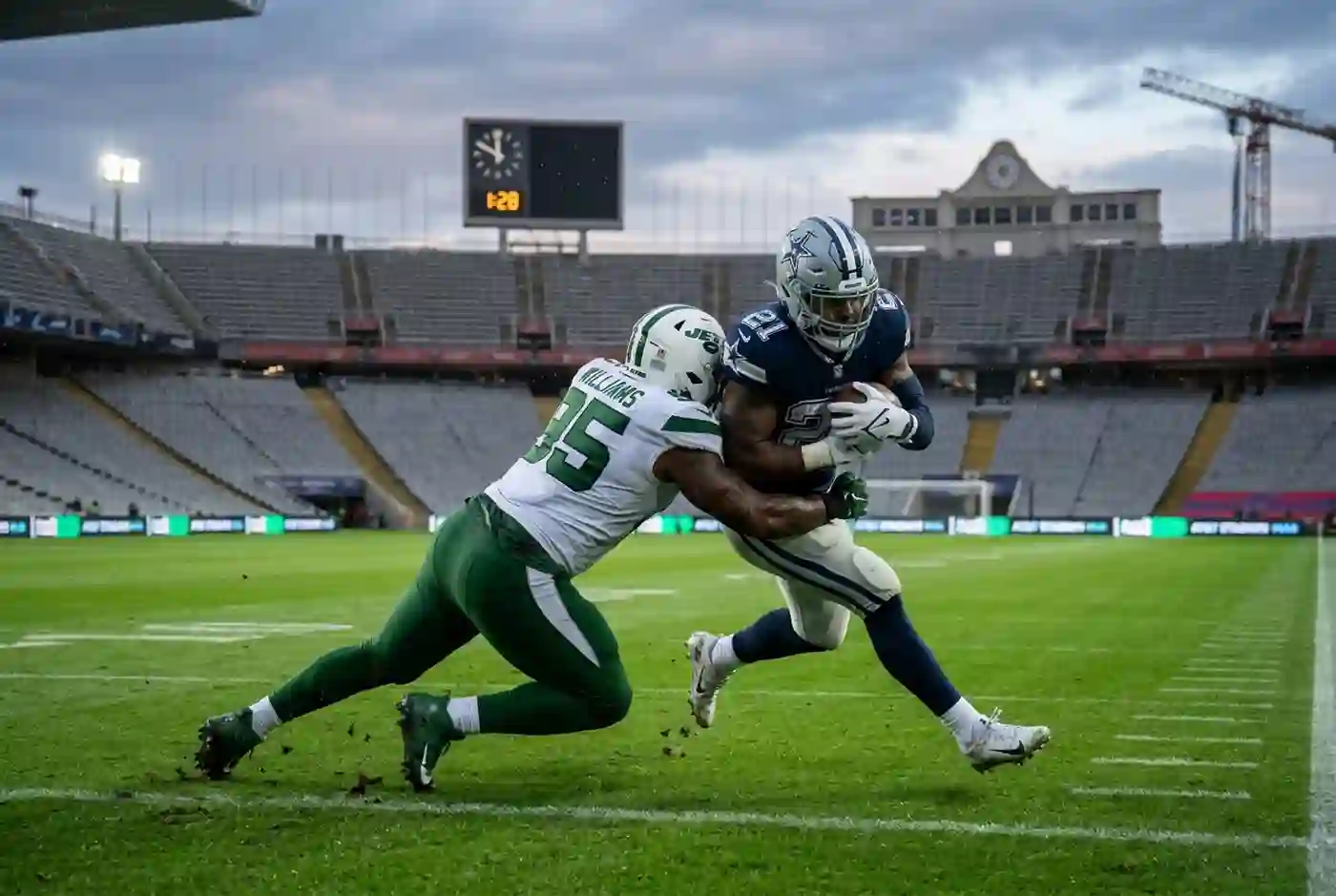
The cowboys vs jets matchup brings together two NFL franchises with different histories, passionate fan bases, and plenty of memorable moments. The Dallas Cowboys are known for their five Super Bowl championships and national following, while the New York Jets have built their identity around a proud New York fan base and their historic Super Bowl III victory.
Their most recent regular season meeting took place on October 5, 2025, when Dallas defeated New York 37–22 at MetLife Stadium. Dak Prescott threw four touchdown passes, Javonte Williams rushed for 135 yards, and the Cowboys took control with a dominant second quarter. The Jets scored twice in the fourth quarter, but the comeback attempt came too late. <Cite refs={[“turn852099search0″,”turn852099search1”]}/>
As of October 21, 2026, neither team’s published regular season schedule lists a meeting between them in the 2026 season. This article looks at their latest matchup, historical record, offensive and defensive strengths, key players, and the factors that could decide their next game.
Cowboys vs Jets Matchup Overview
Dallas and New York play in different conferences, so they do not meet every season. The Cowboys belong to the NFC East, while the Jets compete in the AFC East. Their meetings therefore depend on the NFL’s scheduling rotation and any additional scheduling arrangements.
Dallas holds the advantage in the regular season series. The Cowboys lead 9–5 across 14 regular season meetings, according to Pro Football Reference. The teams have produced some high scoring games, defensive battles, and results that shifted late in the contest. <Cite refs={[“turn332819search5”]}/>
| Matchup detail | Information |
|---|---|
| Teams | Dallas Cowboys vs New York Jets |
| Conferences | NFC vs AFC |
| Dallas home stadium | AT&T Stadium |
| New York home stadium | MetLife Stadium |
| Latest regular season meeting | October 5, 2025 |
| Latest result | Cowboys 37, Jets 22 |
| Regular season series | Cowboys lead 9–5 |
| Confirmed 2026 regular season meeting | None listed on published schedules |
The two teams offer different ways to win. Dallas has often relied on a productive passing game, strong receiver play, and the ability to create explosive scoring drives. New York has looked for ways to combine quarterback production, its running game, and defensive pressure to compete against opponents with high powered offenses.
The most important lesson from their latest meeting was that a single turnover can change the entire game. New York had an opportunity to tie the score in the second quarter, but a fumble gave Dallas the ball and helped set up a decisive scoring run.
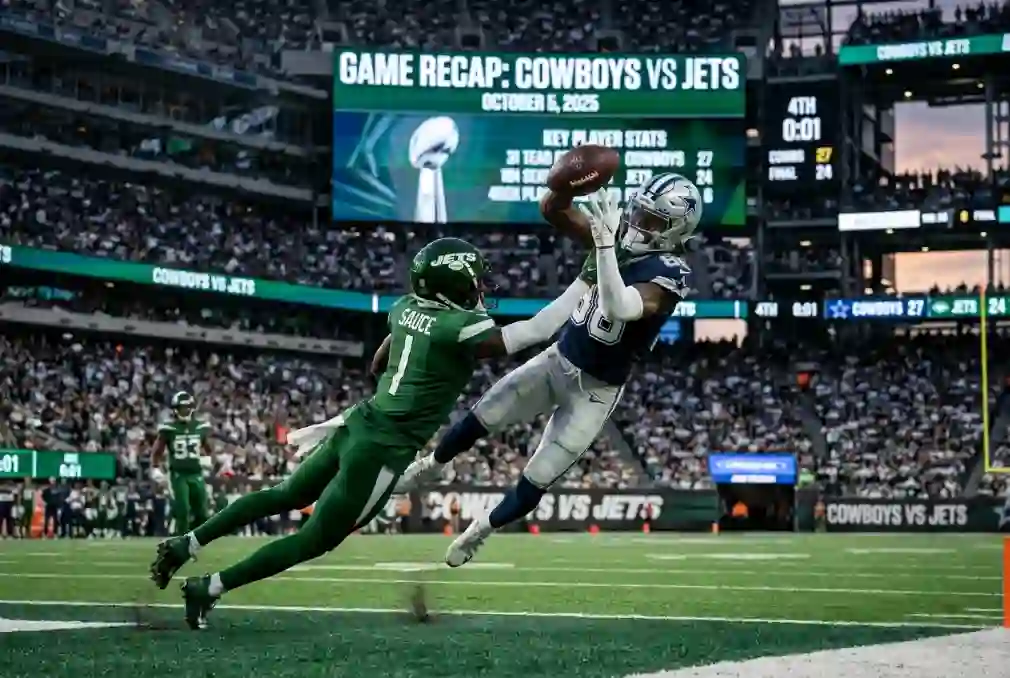
Recap of the October 5, 2025 Game
The Cowboys entered the game looking to bounce back after a 40–40 tie with the Green Bay Packers. The Jets were still searching for their first win of the season.
Despite missing several starting offensive linemen, Dallas delivered one of its most productive offensive performances of the early season. New York moved the ball at times, but a costly fumble and Dallas’s ability to score quickly created a gap the Jets could not overcome. <Cite refs={[“turn852099search0″,”turn852099search2”]}/>
First Quarter Starts Evenly
The Jets opened the scoring with a 25 yard field goal by Nick Folk after a 13 play drive. New York used a methodical approach, moving the ball downfield and trying to establish its offense.
Dallas answered with a 35 yard field goal from Brandon Aubrey. The opening quarter ended with the teams tied 3–3, and the game appeared competitive.
At that stage, the Jets had shown they could sustain a drive. Dallas had yet to reach the end zone, but Prescott was beginning to find openings in the defense.
Dallas Takes Control in the Second Quarter
The Cowboys scored their first touchdown on a 26 yard pass from Prescott to tight end Jake Ferguson. The scoring drive covered 90 yards in 13 plays and gave Dallas a 10–3 lead.
The key moment came later in the quarter. New York was moving into scoring range when linebacker Marist Liufau knocked the ball loose from running back Breece Hall. Defensive end Sam Williams recovered the fumble for Dallas.
The turnover stopped a promising Jets drive and gave the Cowboys possession near their own goal line. Prescott then led a quick scoring drive, with Ryan Flournoy making a major contribution on a 46 yard reception before Javonte Williams finished with a five yard touchdown run.
Dallas scored again just before halftime when Prescott connected with Ferguson for a one yard touchdown. The Cowboys went into the break ahead 23–3.
The sudden change in momentum was decisive. Instead of entering halftime with a chance to tie or narrow the score, New York faced a 20 point deficit.
George Pickens Extends the Lead
Dallas continued its strong performance after halftime. Prescott found George Pickens for a 43 yard touchdown in the third quarter, pushing the lead to 30–3.
The play demonstrated the value of an explosive passing attack. A single completion can turn a promising drive into a touchdown and force the opponent to take greater risks.
New York responded with a 48 yard field goal from Folk, but Dallas still held a commanding advantage entering the final quarter.
The Jets Rally Late
New York showed more urgency in the fourth quarter. Justin Fields connected with fullback Andrew Beck for a one yard touchdown, then completed a two point conversion to tight end Mason Taylor.
Dallas answered with another touchdown pass from Prescott to Williams. That score restored the 23 point lead and effectively ended New York’s hopes of completing the comeback.
The Jets added a late touchdown through Garrett Wilson, with Fields throwing a nine yard scoring pass. The final score was 37–22 in Dallas’s favor. <Cite refs={[“turn852099search3″,”turn852099search5”]}/>
The result reflected Dallas’s ability to capitalize on mistakes and turn short opportunities into points. New York’s late scoring showed offensive potential, but it could not erase the damage done before halftime.
Dallas Cowboys Team Analysis
Dallas’s offensive strength in the 2025 matchup came from its balance between passing and rushing. Prescott distributed the ball efficiently, Ferguson provided a reliable target near the goal line, and Williams delivered a productive running performance.
The Cowboys also showed that offensive line injuries do not automatically prevent a team from moving the ball. Four starting linemen were unavailable or did not play, yet Dallas still produced 416 total yards. <Cite refs={[“turn852099search1″,”turn852099search6”]}/>
Dak Prescott’s Passing Ability
Prescott completed 18 of 29 passes for 237 yards and four touchdowns against New York. He did not throw an interception, and his ability to read the defense helped Dallas take advantage of scoring opportunities.
His performance was especially important because the Cowboys were missing key offensive linemen. Prescott needed to recognize pressure, release the ball on time, and avoid holding it too long.
A quarterback does not need to complete every pass to control a game. Efficient decisions on third down, accurate throws in the red zone, and the ability to recognize defensive pressure can be just as important as total passing yards.
Against a defense that relies on blitzing, Prescott’s quick decisions can create openings for receivers running short routes. If the defense backs off to prevent big plays, Dallas can use underneath throws to move the chains.
The Running Game
Javonte Williams rushed for 135 yards on 16 carries and scored a rushing touchdown against the Jets. He also caught a touchdown pass from Prescott, making him a major part of Dallas’s scoring attack. <Cite refs={[“turn852099search1″,”turn852099search4”]}/>
The Cowboys benefited from Williams’s ability to gain yards after contact and turn running opportunities into explosive plays. His long run late in the second quarter helped Dallas score before halftime and put further pressure on New York.
A productive running game gives an offense more options. It can help control the clock, slow down an aggressive pass rush, and create play action opportunities. Dallas would benefit from maintaining that balance in a future meeting.
However, the team must avoid becoming predictable. If opponents can stop early down runs, they can force Prescott into longer passing situations and give their defensive front more freedom to attack.
Dallas’s Defensive Performance
The Cowboys defense played a major role in the 2025 win. The fumble recovery stopped a Jets scoring opportunity, while the pass rush recorded five sacks and consistently made Fields work for his completions. <Cite refs={[“turn852099search2″,”turn852099search6”]}/>
Creating pressure without sacrificing coverage is a major goal for any defense. When the defensive line can hurry the quarterback, defensive backs have more opportunities to force inaccurate throws or limit yards after the catch.
Dallas also benefited from turning a turnover into immediate points. Defensive plays are most valuable when the offense makes the most of the possession that follows.
For a future matchup, Dallas would need to maintain this discipline while preventing New York from building confidence through its running game and short passing attack.
New York Jets Team Analysis
The Jets lost the 2025 game, but the final score does not tell the full story. New York gained 378 total yards and held the ball for more than 34 minutes. The team also converted seven of 16 third downs, showing it could sustain drives. However, the fumble in the second quarter and Dallas’s quick scoring response proved too costly. <Cite refs={[“turn852099search2″,”turn852099search3”]}/>
Justin Fields and the Passing Game
Fields completed 32 of 46 passes for 283 yards and two touchdowns against Dallas. He also faced considerable pressure, taking five sacks and absorbing repeated hits. <Cite refs={[“turn852099search2″,”turn852099search12”]}/>
The numbers show that New York could move the ball through the air. The bigger problem was how the offense handled pressure and high leverage situations.
A quarterback can complete plenty of passes and still struggle to keep his team competitive if the offense falls behind by multiple scores. Once a team is trailing, it may need to throw more often, which can make the defense’s job easier.
Fields’s mobility can give the Jets another dimension, particularly when defensive ends rush too far upfield. Designed runs and quick passes can help reduce pressure, but the offense still needs to protect the ball and finish drives with touchdowns.
For a future matchup, New York would benefit from a more balanced plan that uses the running game, quick passing concepts, and occasional deep shots.
Breece Hall’s Role
Hall rushed for 113 yards on 14 carries against Dallas and added 42 receiving yards. He was one of the Jets’ most productive offensive players, but his second quarter fumble became the turning point of the game. <Cite refs={[“turn852099search2″,”turn852099search12”]}/>
His performance illustrated both the value and risk of a featured running back. Hall could gain yards on the ground and provide another passing option, but the lost fumble gave Dallas a chance to increase its lead.
Ball security is critical for running backs, particularly when a game is close. A team can spend several minutes driving downfield, only to lose its opportunity through one mistake.
The Jets need to keep Hall involved while protecting the football. His running ability can help control the pace and make the passing game more effective, but turnovers must be limited.
Garrett Wilson and the Receiving Group
Wilson scored a late touchdown against Dallas and finished with six catches for 71 yards. Rookie tight end Mason Taylor also contributed nine receptions for 67 yards. <Cite refs={[“turn852099search2″,”turn852099search12”]}/>
Those contributions showed that New York had options beyond its running game. Short passes to receivers and tight ends can help an offense move the chains and reduce the need for risky deep throws.
The challenge is turning those completions into points before the game gets out of reach. The Jets need to find ways to create explosive plays earlier, especially when opponents are loading the box to stop the run.
A stronger combination of quick passing, running plays, and protection adjustments could make New York more difficult to defend in a future meeting.
Head to Head History
Dallas leads the regular season series 9–5, according to Pro Football Reference. The teams have met 14 times in the regular season, with Dallas winning more often overall. <Cite refs={[“turn332819search5”]}/>
Their history stretches back to 1971. The Cowboys won that first listed meeting 52–10, then added victories in several later matchups. New York has also earned important wins, including a 24–22 victory in 2019.
The series has featured some clear Dallas victories. The Cowboys defeated the Jets 30–10 in 2023 and won 37–22 in 2025. Those results highlight Dallas’s ability to create scoring opportunities when its offense is operating efficiently.
However, historical records should not be treated as a guarantee of future results. Rosters, coaching staffs, defensive schemes, and quarterback situations change over time. The most useful way to evaluate a future matchup is to combine historical context with current performance.
The series record is a helpful starting point, but the teams’ current form and health would matter far more when preparing a game prediction.
Five Factors That Could Decide a Future Game
1. Turnover Margin
The 2025 game showed how costly a turnover can be. Hall’s fumble stopped a Jets drive and helped Dallas create a major scoring swing.
Both teams would need to prioritize ball security, particularly near midfield and inside the red zone. Winning the turnover battle often gives a team extra possessions and better field position.
2. Quarterback Protection
Dallas managed to protect Prescott effectively despite significant offensive line absences in the 2025 matchup. New York, by contrast, struggled to keep Fields clean.
A future game could depend on which offensive line handles pressure more effectively. Quick releases, running plays, and smart protection calls can help reduce the impact of an aggressive defensive front.
3. Red Zone Efficiency
Teams must turn drives into touchdowns instead of settling for field goals. Dallas scored four passing touchdowns in the 2025 game, while New York struggled to keep pace until late.
A future meeting could be decided by how often each offense finishes drives with seven points rather than three.
4. Explosive Plays
Dallas created major gains through Prescott’s passing and Williams’s running. Those plays helped the Cowboys build a lead quickly.
New York needs to produce its own explosive plays without forcing low percentage throws. A few well timed deep passes or long runs can change the shape of a game.
5. Second Half Adjustments
The Jets scored 16 points in the fourth quarter of the 2025 game, showing that they could find ways to attack Dallas late. However, their response came after the Cowboys had established a large lead.
Coaches need to identify defensive weaknesses early and make adjustments before the scoreboard becomes difficult to overcome. Second half performance matters, but the best teams also avoid creating a crisis in the first place.
Cowboys vs Jets Prediction for a Future Meeting
There is no confirmed regular season meeting between the teams on their published 2026 schedules, so a game specific prediction would be premature. Both teams were listed at 2–4 after Week 6 of the 2026 season, but their records alone do not establish how a future meeting would unfold. <Cite refs={[“turn332819search0″,”turn332819search3”]}/>
Dallas would have a strong case if Prescott and the offense could maintain their efficiency while the defense created pressure and limited explosive plays. The Cowboys’ 2025 performance showed how effective they can be when they protect the ball and capitalize on opponents’ mistakes.
New York’s best path would involve a more consistent running game, better protection for its quarterback, and improved ball security. The Jets would also need to keep the game close enough to make their late offensive drives meaningful.
Venue would matter. A game at AT&T Stadium would give Dallas home field advantage, while a meeting at MetLife Stadium would allow the Jets to play in familiar conditions. Injuries and current roster changes would also influence any forecast.
Rather than assigning an unsupported score to an unconfirmed game, the sensible conclusion is that Dallas has the historical edge, but the next result would depend on current team performance and execution.
What Fans Should Watch Next
Fans following these teams should pay attention to three broad areas as the season continues.
First, watch how Dallas handles pressure. The Cowboys have shown they can generate points through the passing game and running attack, but consistency against strong defensive fronts remains important.
Second, watch whether the Jets can reduce costly mistakes. New York showed offensive potential against Dallas in 2025, but a single turnover changed the game. Protecting the football and finishing drives would make the team more competitive.
Third, follow the official schedules for a future meeting. Because the teams belong to different conferences, their next regular season matchup is not necessarily guaranteed in the following year.
Current injury reports, quarterback availability, offensive line combinations, and defensive performance should all be reviewed before drawing conclusions about a future contest.
Final Verdict
The Cowboys and Jets have a 14 game regular season history, with Dallas leading 9–5. Their most recent meeting, on October 5, 2025, ended in a 37–22 Cowboys victory.
Prescott’s four touchdown passes, Williams’s productive rushing performance, and a key defensive turnover helped Dallas control the game. New York gained yards and scored late, but its second quarter fumble and the Cowboys’ rapid scoring sequence made the deficit too large.
For Dallas, the main lesson is the value of balanced offense and timely defensive pressure. For New York, the takeaway is that moving the ball is not enough when turnovers and missed scoring opportunities change the momentum.
The next matchup will require a fresh assessment of both teams. Historical results provide context, but current form, player availability, and execution will decide the outcome.
Frequently Asked Questions
Who won the latest Cowboys vs Jets game?
The Dallas Cowboys defeated the New York Jets 37–22 on October 5, 2025, at MetLife Stadium. Dak Prescott threw four touchdown passes, and Javonte Williams rushed for 135 yards.
What is the Cowboys and Jets all time record?
Dallas leads the regular season series 9–5 across 14 meetings, according to Pro Football Reference.
When will the Cowboys play the Jets again?
The published 2026 regular season schedules do not list a Cowboys and Jets matchup. Check the official team schedules for future updates.
How did Dak Prescott perform against the Jets in 2025?
Prescott completed 18 of 29 passes for 237 yards and four touchdowns without an interception in the 37–22 win.
What was the turning point in the 2025 game?
Breece Hall’s second quarter fumble stopped a promising Jets drive. Dallas capitalized with quick scoring drives and took a 23–3 lead into halftime.
Which team has the historical advantage?
Dallas holds the advantage in the regular season series, but historical records do not guarantee the outcome of a future game. Current team form and player availability will matter most.

Logan Carter writes straightforward sports guides to help fans find NFL game times, TV channels, and streaming options. He makes sports information easy to understand so readers can spend less time searching and more time enjoying the game.
1 thought on “Cowboys vs Jets Stats, Picks and Game Preview”