


The Bears vs Seahawks match player stats from November 2, 2026, tell the story of Chicago’s impressive 34-17 road victory over Seattle at Lumen Field. D’Andre Swift led the Bears with three rushing touchdowns, while quarterback Caleb Williams completed 24 of 34 passes for 247 yards and one touchdown. Seattle quarterback Sam Darnold threw for 188 yards and two touchdowns, but his interception and the Seahawks’ struggles on third down made it difficult to keep pace. Jaxon Smith-Njigba also delivered a strong performance with 118 receiving yards and a touchdown.
This Week 8 Monday Night Football matchup featured strong offensive contributions from both teams, but Chicago controlled the ground game, protected the football more effectively, and finished several important drives.
Game identification: The keyword refers to the October 2026 regular-season matchup between the Chicago Bears and Seattle Seahawks. The game took place on November 2, 2026, at Lumen Field in Seattle. Chicago won 34–17, according to the Bears’ official schedule. chicagobears.com+1
This article covers the completed game, rather than treating it as an upcoming matchup.
Monday Night Football
Lumen Field • Seattle, WA

Bears
6-2
34
Final
Nov 3
17
Seahawks
4-4
OverviewTeam StatsPlayer StatsPlay-By-Play


Bears vs Seahawks match player stats Game Information
| Detail | Result |
|---|---|
| Matchup | Chicago Bears vs Seattle Seahawks |
| Date | November 2, 2026 |
| Competition | NFL Regular Season |
| Week | Week 8 |
| Stadium | Lumen Field |
| Location | Seattle, Washington |
| Final Score | Bears 34, Seahawks 17 |
| Winning Team | Chicago Bears |
Bears vs Seahawks match player stats Final Score by Quarter
| Team | Q1 | Q2 | Q3 | Q4 | Final |
|---|---|---|---|---|---|
| Chicago Bears | 7 | 6 | 7 | 14 | 34 |
| Seattle Seahawks | 0 | 9 | 0 | 8 | 17 |
Chicago built an early advantage, survived Seattle’s second-quarter response, and pulled away with 14 points in the fourth quarter. Pro Football Reference+1
Bears vs Seahawks Match Player Stats at a Glance
The most important individual performances came from quarterback Caleb Williams, running back D’Andre Swift, and wide receiver Rome Odunze for Chicago. Seattle’s leading offensive performers were quarterback Sam Darnold and receiver Jaxon Smith-Njigba.
| Player | Team | Key performance |
|---|---|---|
| Caleb Williams | Bears | 247 passing yards, 1 TD |
| D’Andre Swift | Bears | 69 rushing yards, 3 TDs |
| Rome Odunze | Bears | 87 receiving yards |
| Luther Burden III | Bears | 56 receiving yards, 1 TD |
| Sam Darnold | Seahawks | 188 passing yards, 2 TDs, 1 INT |
| Jaxon Smith-Njigba | Seahawks | 118 receiving yards, 1 TD |
| Jadarian Price | Seahawks | 29 rushing yards |
| Cooper Kupp | Seahawks | 7 receiving yards, 1 TD |
Pro Football Reference+2
Chicago Bears Player Stats
Chicago finished with 34 points and produced a balanced offensive performance. The player Caleb Williams handled the passing game, while D’Andre Swift supplied the biggest scoring contribution.
Caleb Williams Passing Stats
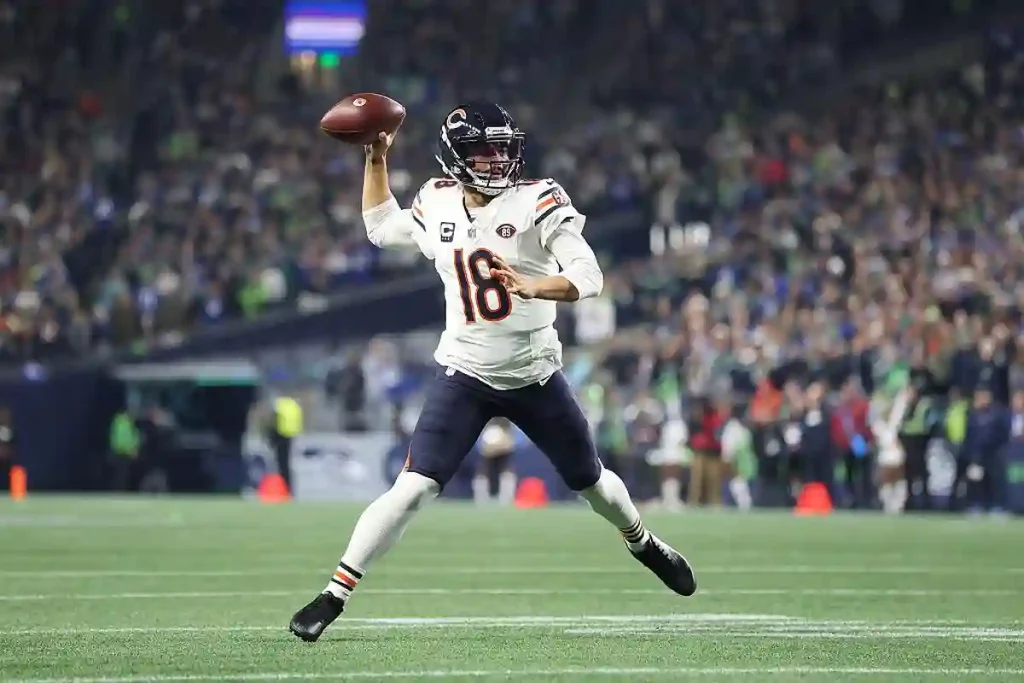
Caleb Williams | Quarterback
101.0 passer rating
- Completions: 24
- Attempts: 34
- Passing yards: 247
- Completion rate: 70.6%
- Passing touchdowns: 1
- Interceptions: 0
- Sacks taken: 1 for 10 yards
- Longest completion: 24 yards
Williams delivered a controlled performance against Seattle’s defense. He completed 24 of 34 passes and finished with 247 yards and one touchdown.
His 70.6% completion rate helped Chicago maintain possession and move the chains. More importantly, he avoided throwing an interception.
The Bears did not need Williams to produce an unusually high passing total because their running game handled much of the scoring responsibility.
His connection with Luther Burden III also produced Chicago’s opening touchdown. That early score helped establish control of the game.
D’Andre Swift Rushing Stats
D’Andre Swift | Running Back
3 rushing touchdowns
- Carries: 27
- Rushing yards: 69
- Average: 2.6 yards
- Longest run: 7 yards
- Rushing touchdowns: 3
- Receptions: 2
- Receiving yards: 10
Swift was Chicago’s biggest scoring contributor.
Although his average of 2.6 yards per carry was not particularly high, he delivered when the Bears reached the goal line.
He scored three rushing touchdowns, including two important fourth-quarter scores.
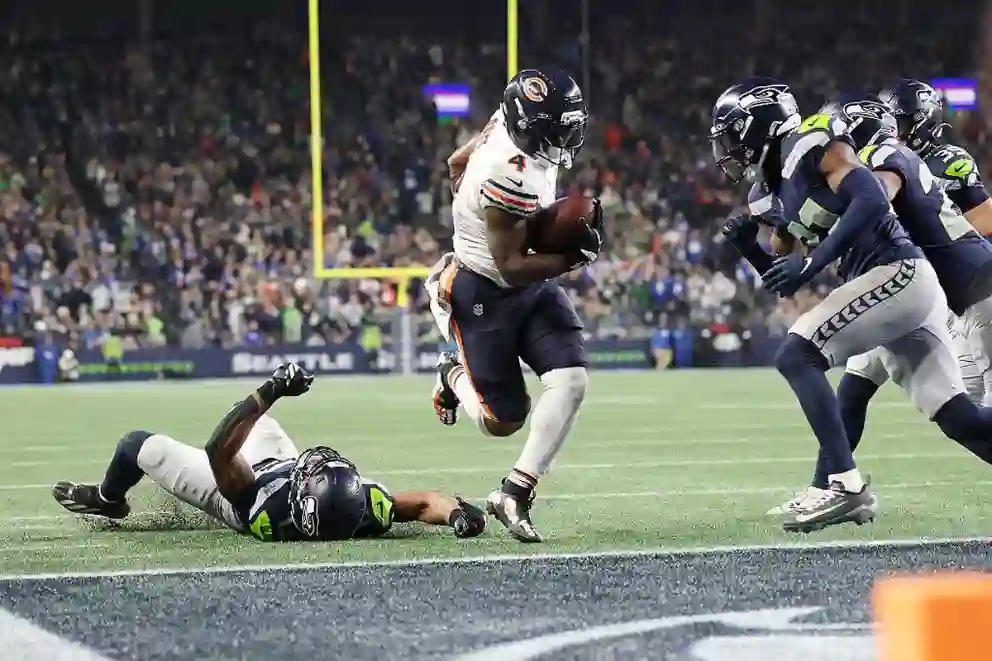
His first touchdown came from one yard out in the third quarter. He then added two five-yard rushing touchdowns in the final period.
This performance demonstrates why rushing efficiency cannot be judged by average yards alone. Swift’s ability to finish drives was a major reason Chicago won.
Rome Odunze Receiving Stats
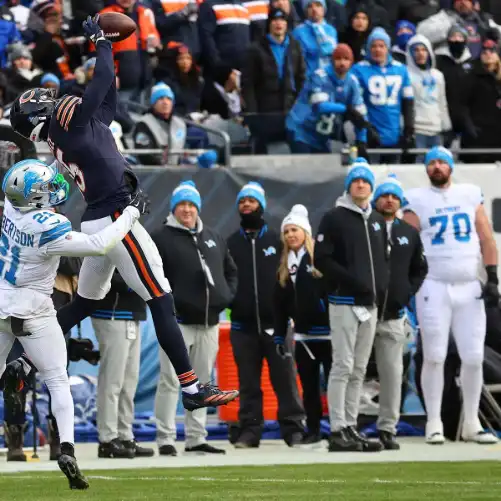
Rome Odunze | Wide Receiver
- Targets: 6
- Receptions: 4
- Receiving yards: 87
- Average: 21.8 yards
- Longest reception: 24 yards
- Receiving touchdowns: 0
Odunze led Chicago in receiving yards.
He caught four passes for 87 yards on six targets. His 21.8 yards per reception showed his ability to gain significant yardage without needing a high reception total.
Odunze provided an important downfield option for Williams and helped stretch Seattle’s defensive coverage.
He did not record a receiving touchdown, but his contribution helped Chicago move the football consistently.
Luther Burden III Receiving Stats

Luther Burden III | Wide Receiver
1 receiving touchdown
- Targets: 9
- Receptions: 7
- Receiving yards: 56
- Average: 8.0 yards
- Longest reception: 23 yards
- Receiving touchdowns: 1
Burden made an important contribution by catching Chicago’s opening touchdown.
He finished with seven receptions for 56 yards and converted nine targets into a productive receiving performance.
His one-yard touchdown reception from Williams gave the Bears a 7-0 lead in the first quarter.
That early connection helped Chicago establish its offensive rhythm.
Colston Loveland Receiving Stats

Colston Loveland | Tight End
- Targets: 9
- Receptions: 7
- Receiving yards: 65
- Average: 9.3 yards
- Longest reception: 15 yards
- Receiving touchdowns: 0
- Fumbles lost: 1
Loveland was another reliable target for Chicago. He caught seven passes for 65 yards and tied Burden for the team’s highest reception total.
However, his fumble was an important negative moment in the game. Chicago lost possession after the turnover, giving Seattle an opportunity to respond.
Despite that mistake, Loveland remained productive as a receiving option.
Other Bears Offensive Contributions
| Player | Carries | Rush Yards | Receptions | Receiving Yards |
|---|---|---|---|---|
| Kalif Raymond | 1 | 39 | 2 | 14 |
| Roschon Johnson | 5 | 17 | 1 | 11 |
| Caleb Williams | 2 | 1 | 0 | 0 |
| D’Andre Swift | 27 | 69 | 2 | 10 |
| Zavion Thomas | 0 | 0 | 1 | 4 |
Kalif Raymond provided one of the most unusual plays of the game with a 39-yard rushing attempt. That single carry gave him the highest rushing average among Chicago’s players.
Seattle Seahawks Player Stats
Seattle’s offense produced 17 points, with Sam Darnold throwing two touchdown passes. Jaxon Smith-Njigba was the team’s leading receiver, but the Seahawks struggled to maintain consistent offensive production.
Sam Darnold Passing Stats
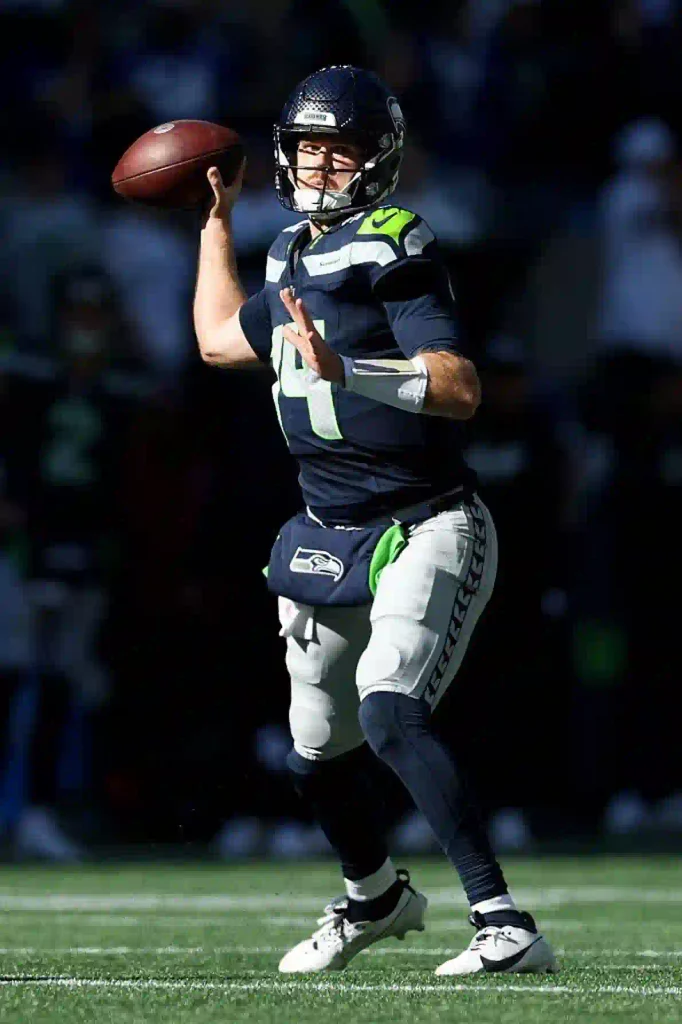
Sam Darnold | Quarterback
74.1 passer rating
- Completions: 17
- Attempts: 34
- Passing yards: 188
- Completion rate: 50%
- Passing touchdowns: 2
- Interceptions: 1
- Sacks taken: 3 for 17 yards
- Longest completion: 43 yards
Darnold finished with two passing touchdowns, but his overall performance was less efficient than Williams’.
He completed only half of his passes and threw one interception. The Bears also recorded three sacks against him.
His touchdown connections with Jaxon Smith-Njigba and Cooper Kupp gave Seattle opportunities to stay competitive.
However, the offense struggled to produce enough consistent drives to challenge Chicago’s lead.
Jaxon Smith-Njigba Receiving Stats

Jaxon Smith-Njigba | Wide Receiver
118 receiving yards
- Targets: 11
- Receptions: 6
- Receiving yards: 118
- Average: 19.7 yards
- Longest reception: 43 yards
- Receiving touchdowns: 1
Smith-Njigba was Seattle’s most productive offensive player.
He recorded 118 yards on six receptions and scored the Seahawks’ first touchdown.
His 43-yard touchdown reception came late in the second quarter. It reduced Chicago’s advantage and gave Seattle some momentum before halftime.
He also averaged 19.7 yards per reception, making him a major threat whenever Darnold found him in open space.
Despite his strong individual numbers, Seattle could not build enough scoring drives around his production.
Cooper Kupp Receiving Stats
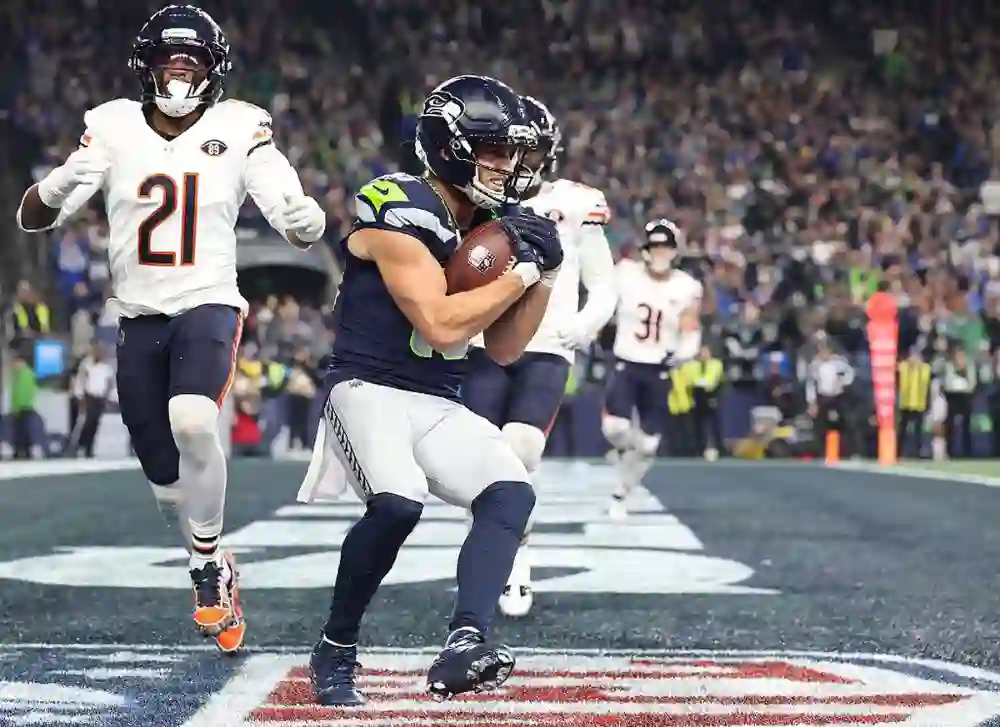
Cooper Kupp | Wide Receiver
1 receiving touchdown
- Targets: 3
- Receptions: 1
- Receiving yards: 7
- Average: 7.0 yards
- Longest reception: 7 yards
- Receiving touchdowns: 1
Kupp had limited receiving production, but his touchdown was important for Seattle.
He caught a seven-yard scoring pass from Darnold in the fourth quarter. Darnold then connected with Tory Horton for a successful two-point conversion.
The play brought Seattle within three points at 20-17.
However, Chicago responded with two more Swift touchdowns and secured the victory.
Jadarian Price Rushing Stats

Jadarian Price | Running Back
- Carries: 10
- Rushing yards: 29
- Average: 2.9 yards
- Longest run: 9 yards
- Rushing touchdowns: 0
- Receptions: 2
- Receiving yards: 8
Price led Seattle in rushing attempts and rushing yards.
He finished with 29 yards on 10 carries. However, the Seahawks could not generate the same goal-line production as Chicago.
His workload was important, but the overall rushing attack produced only 81 yards.
Zach Charbonnet Rushing Stats

Zach Charbonnet | Running Back
- Carries: 6
- Rushing yards: 23
- Average: 3.8 yards
- Longest run: 13 yards
- Rushing touchdowns: 0
- Receptions: 3
- Receiving yards: 6
Charbonnet added 23 rushing yards and three receptions.
His longest run covered 13 yards, but he did not score a touchdown.
Seattle needed more production from its ground game to reduce the pressure on Darnold and create a better offensive balance.
Other Seahawks Receiving Stats
| Player | Targets | Receptions | Receiving Yards | TDs |
|---|---|---|---|---|
| Jaxon Smith-Njigba | 11 | 6 | 118 | 1 |
| Tory Horton | 6 | 3 | 26 | 0 |
| AJ Barner | 5 | 2 | 23 | 0 |
| Jadarian Price | 4 | 2 | 8 | 0 |
| Cooper Kupp | 3 | 1 | 7 | 1 |
| Zach Charbonnet | 4 | 3 | 6 | 0 |
| George Holani | 1 | 0 | 0 | 0 |
NFL+1
Bears vs Seahawks match player stats Team Stats Comparison
Individual performances tell only part of the story. Team statistics explain why Chicago controlled the matchup and finished with a 17-point victory.

Complete Team Comparison
| Team Statistic | Chicago Bears | Seattle Seahawks |
|---|---|---|
| Final Score | 34 | 17 |
| Total Net Yards | 363 | 252 |
| Passing Yards | 247 gross | 188 gross |
| Net Passing Yards | 237 | 171 |
| Rushing Yards | 126 | 81 |
| Total Offensive Plays | 70 | 56 |
| First Downs | 22 | 18 |
| Third Down Efficiency | 7 of 15 | 1 of 11 |
| Fourth Down Efficiency | 1 of 1 | 1 of 2 |
| Turnovers Lost | 2 | 1 |
| Sacks Allowed | 1 | 3 |
| Penalties | 10 | 5 |
| Penalty Yards | 85 | 43 |
| Time of Possession | 35:03 | 24:57 |
| Red Zone Efficiency | 4 of 4 | 1 of 4 |
Source: Official NFL game summary. Chicago’s two turnovers included one interception and one lost fumble. NFL+1
Total Offensive Yards
Chicago gained 363 net yards compared with Seattle’s 252.
The 111-yard difference shows how much more productive the Bears were throughout the contest.
Chicago gained 126 rushing yards and 237 net passing yards. Seattle finished with 81 rushing yards and 171 net passing yards.
The Bears were more effective at keeping their offense on the field and moving into scoring positions.
Third Down Efficiency
Third-down performance was one of the clearest differences.
- Bears: 7 conversions on 15 attempts.
- Seahawks: 1 conversion on 11 attempts.
Chicago converted 46.7% of its third downs, while Seattle converted only 9.1%.
This difference limited Seattle’s ability to extend drives and gave Chicago more opportunities to control the clock.
Red Zone Performance
The Bears were particularly effective near the goal line.
Chicago converted all four red-zone opportunities into touchdowns.
Seattle managed only one touchdown in four red-zone trips.
That difference was important because both teams had opportunities to score, but Chicago finished its drives much more consistently.
Time of Possession
Chicago controlled the ball for 35 minutes and 3 seconds.
Seattle had possession for 24 minutes and 57 seconds.
The Bears’ longer possessions helped keep their defense off the field and limited Seattle’s opportunities to build offensive momentum.
Penalties and Turnovers
Chicago committed more penalties than Seattle.
The Bears recorded 10 penalties for 85 yards, while the Seahawks had five penalties for 43 yards.
Chicago also lost two turnovers, including an interception and a fumble. Seattle lost one interception.
Despite committing more mistakes, Chicago’s offensive efficiency and red-zone execution helped overcome those problems.
Defensive Player Stats and Key Performances
Defense played an important role in the result. Chicago’s ability to disrupt Seattle’s passing game and limit its rushing production helped the Bears maintain their advantage.
Chicago Bears Defense
The Bears recorded one interception through defensive lineman James Lynch, who returned it for 16 yards.
That turnover provided Chicago with another opportunity to take control of the game.
The defense also recorded three sacks against Seattle’s quarterback? No. The official game summary lists three sacks against Sam Darnold as a team statistic, while Chicago’s offensive line allowed one sack. These defensive pressure numbers helped restrict Seattle’s passing production.
Seattle Seahawks Defense
Seattle’s defense faced 70 Chicago offensive plays and allowed 363 net yards.
The Seahawks also recovered a fumble, which came from Colston Loveland.
However, Seattle struggled to stop the Bears in the red zone. Chicago converted all four opportunities into touchdowns.
The defensive unit needed more successful third-down stops to give its offense additional possessions.
How the Bears Won the Game
The final score does not tell the entire story. Chicago’s victory came from several important moments across all four quarters.
First Quarter: Chicago Takes the Early Lead
The Bears opened the scoring with an 80-yard drive.
Caleb Williams connected with Luther Burden III for a one-yard touchdown pass with 5:25 remaining in the first quarter.
Cairo Santos added the extra point, giving Chicago a 7-0 advantage.
Seattle struggled to establish an early offensive rhythm and did not score in the opening period.
Second Quarter: Seattle Responds
Seattle finally got on the scoreboard through a 27-yard field goal from Jason Myers.
Chicago answered with two field goals from Cairo Santos, who converted attempts from 44 and 38 yards.
The Bears extended their lead to 13-3.
However, Seattle responded just before halftime. Darnold connected with Smith-Njigba for a 43-yard touchdown.
The Seahawks missed the extra point, leaving the score at 13-9.
That late touchdown gave Seattle some hope heading into the second half.
Third Quarter: Swift Extends Chicago’s Advantage
Chicago started the second half with another productive scoring drive.
Swift finished a 69-yard drive with a one-yard rushing touchdown.
Santos converted the extra point, moving the score to 20-9.
Seattle failed to score in the third quarter.
That offensive setback made the final period particularly important for the Seahawks.
Fourth Quarter: Seattle Gets Close but Chicago Finishes Strong
Seattle made one more serious attempt to change the result.
Darnold connected with Cooper Kupp for a seven-yard touchdown. The Seahawks also completed a two-point conversion through a pass to Tory Horton.
The score became 20-17, putting Seattle within three points.
However, Chicago responded immediately.
Swift scored his second touchdown of the night on a five-yard run with 8:28 remaining.
He added another five-yard touchdown with 4:41 left on the clock.
Those two scores gave Chicago a 34-17 lead and effectively ended Seattle’s comeback attempt.
The Bears finished the game with a comfortable victory.NFL+1
What the Bears vs Seahawks Match Player Stats Reveal
The statistical comparison highlights three major reasons behind Chicago’s win.
1. Swift Made the Difference Near the Goal Line
Swift’s three rushing touchdowns were the biggest scoring contribution of the game.
Chicago did not rely entirely on its quarterback to finish drives. Instead, it used its running game effectively when the offense reached scoring positions.
2. Williams Protected the Football
Williams threw for 247 yards and one touchdown without an interception.
Darnold produced two touchdown passes, but his interception and three sacks made Seattle’s passing attack less efficient.
The difference in quarterback performance was not simply about touchdown totals. Ball security and consistency also mattered.
3. Seattle Could Not Sustain Offensive Drives
Smith-Njigba had an excellent individual performance, but Seattle struggled to turn its passing production into enough points.
The Seahawks converted only one of 11 third downs and scored on just one of four red-zone opportunities.
Those numbers explain why Seattle could not keep pace with Chicago.
Top Performers of the Game
Here are the leading individual performances from both teams.
| Category | Player | Team | Performance |
|---|---|---|---|
| Passing Yards | Caleb Williams | Bears | 247 |
| Passing TDs | Sam Darnold | Seahawks | 2 |
| Rushing Yards | D’Andre Swift | Bears | 69 |
| Rushing TDs | D’Andre Swift | Bears | 3 |
| Receiving Yards | Jaxon Smith-Njigba | Seahawks | 118 |
| Bears Receiving Yards | Rome Odunze | Bears | 87 |
| Receiving TDs | Smith-Njigba, Burden, Kupp | Both | 1 each |
| Interception | James Lynch | Bears | 1 |
Photos and Highlights From the Game

These photo ideas can help improve the visual presentation of your match report.
- Opening image: Bears and Seahawks players during game action.
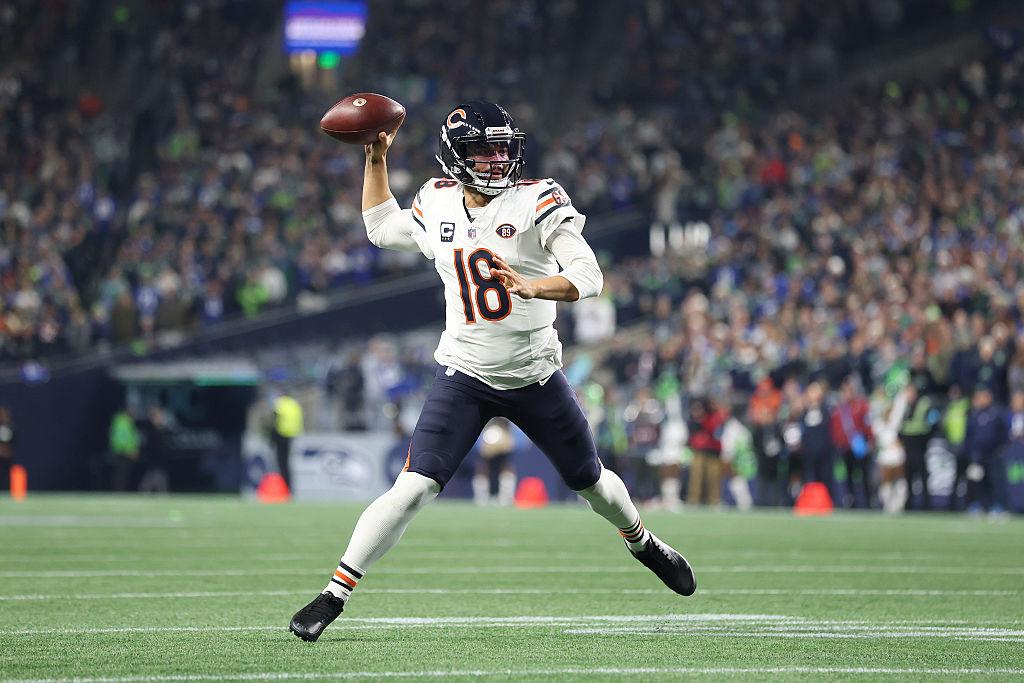
- Quarterback section: Caleb Williams throwing a pass.
- Rushing section: D’Andre Swift scoring a touchdown.
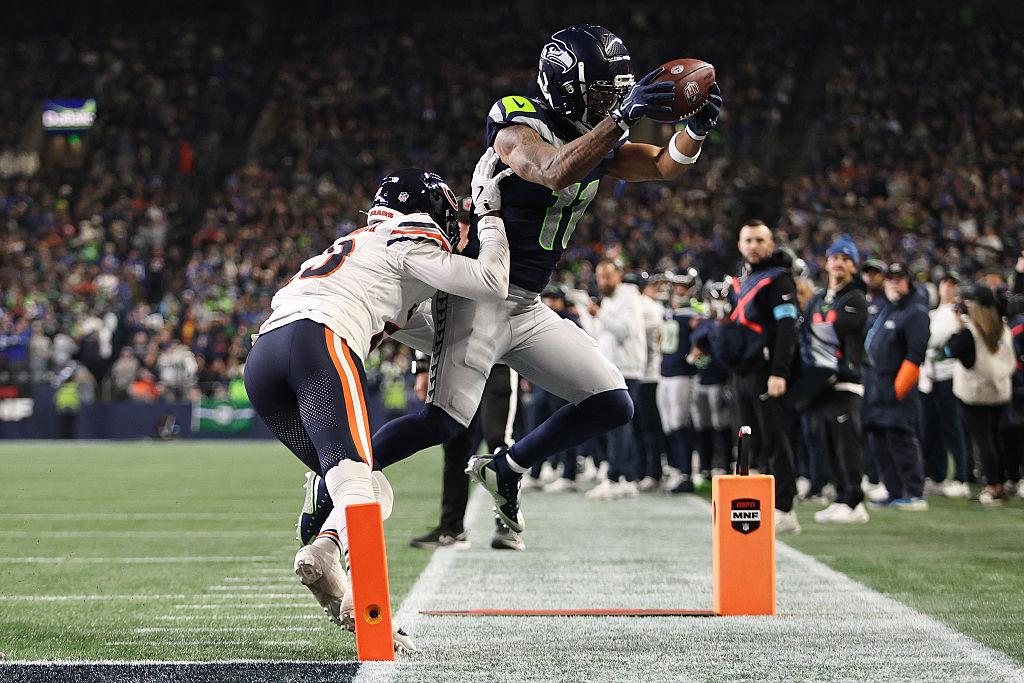
- Receiving section: Jaxon Smith-Njigba making a catch.
- Game recap: Chicago players celebrating the win.
Use verified editorial photographs from official team galleries or licensed sports photo providers when publishing. The image searches above are visual references, not verification that each image depicts this exact game.
Key Match Statistics to Remember
Before looking at the final takeaways, keep these important numbers in mind:
- Chicago won by 17 points.
- Caleb Williams completed 24 of 34 passes.
- D’Andre Swift scored three rushing touchdowns.
- Rome Odunze led Chicago with 87 receiving yards.
- Jaxon Smith-Njigba led all receivers with 118 yards.
- Sam Darnold threw two touchdowns and one interception.
- Chicago controlled possession for more than 35 minutes.
- The Bears converted all four red-zone opportunities.
Frequently Asked Questions
Who won the Bears vs Seahawks game in 2026?
The Chicago Bears defeated the Seattle Seahawks 34-17 on November 2, 2026, at Lumen Field in Seattle.
How many passing yards did Caleb Williams record?
Caleb Williams completed 24 of 34 passes for 247 yards and one touchdown. He did not throw an interception.
How many touchdowns did D’Andre Swift score?
D’Andre Swift scored three rushing touchdowns. He finished with 69 rushing yards on 27 carries.
How many passing touchdowns did Sam Darnold throw?
Sam Darnold threw two touchdown passes for Seattle. He finished with 188 passing yards and one interception.
Who had the most receiving yards in the game?
Jaxon Smith-Njigba led all players with 118 receiving yards on six receptions. He also caught one touchdown pass.
How many receiving yards did Rome Odunze have?
Rome Odunze recorded 87 receiving yards on four receptions from six targets.
How many rushing yards did the Bears record?
Chicago recorded 126 rushing yards on 35 attempts. D’Andre Swift led the team with 69 yards.
How many rushing yards did the Seahawks record?
Seattle finished with 81 rushing yards on 19 attempts. Jadarian Price led the Seahawks with 29 rushing yards.
What was the score at halftime?
Chicago led Seattle 13-9 at halftime. The Seahawks scored a touchdown late in the second quarter to reduce the deficit.
Where was the Bears vs Seahawks game played?
The game took place at Lumen Field in Seattle, Washington, on November 2, 2026.
Which team had more total yards?
Chicago finished with 363 net yards, compared with Seattle’s 252. The Bears also had more rushing and net passing yards.
How many sacks did the Bears record?
Chicago recorded three sacks against Sam Darnold. Seattle recorded one sack against Caleb Williams.
Final Verdict
The November 2 matchup showed why balanced offense and effective red-zone execution matter in the NFL.
Chicago won 34-17 because it combined Caleb Williams’ efficient passing with D’Andre Swift’s three rushing touchdowns. Rome Odunze and Luther Burden III also made important contributions to the passing attack.
Seattle had some impressive individual performances. Jaxon Smith-Njigba finished with 118 receiving yards and a touchdown, while Sam Darnold threw two scoring passes. However, the Seahawks struggled to convert third downs and finish scoring opportunities.
The Bears vs Seahawks match player stats highlight the difference between individual production and overall team execution. Seattle had a standout receiving performance, but Chicago was more effective at turning offensive opportunities into points.
For fans, fantasy football followers, and NFL analysts, this game offers plenty to examine across quarterback efficiency, rushing production, receiving yards, turnovers, and team performance.

Logan Carter writes straightforward sports guides to help fans find NFL game times, TV channels, and streaming options. He makes sports information easy to understand so readers can spend less time searching and more time enjoying the game.