


The WNBA Finals Game 4 player stats tell the story of a crucial championship matchup between the Golden State Valkyries and Atlanta Dream on October 24, 2026. Golden State responded to back-to-back losses with a 67-62 road victory at State Farm Arena in Atlanta, tying the best-of-seven championship series at 2-2.
Gabby Williams led the Valkyries with 17 points, while Rhyne Howard paced Atlanta with 19. Kiah Stokes made a major impact on the defensive end, collecting 16 rebounds and recording three blocks. Angel Reese, who had dominated the previous two games, was limited to eight points.
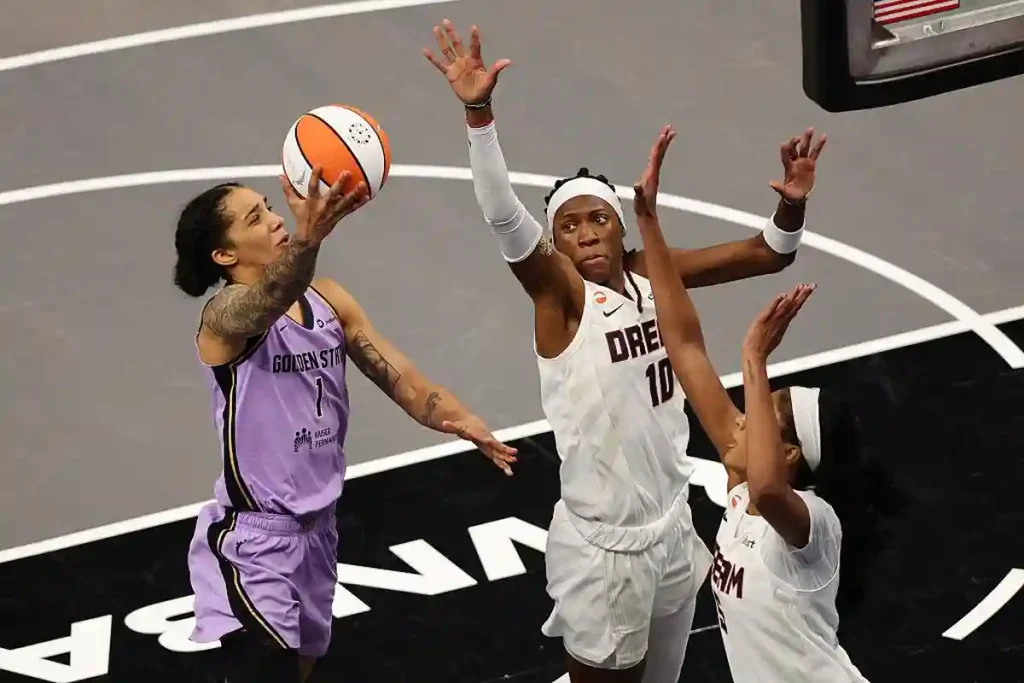
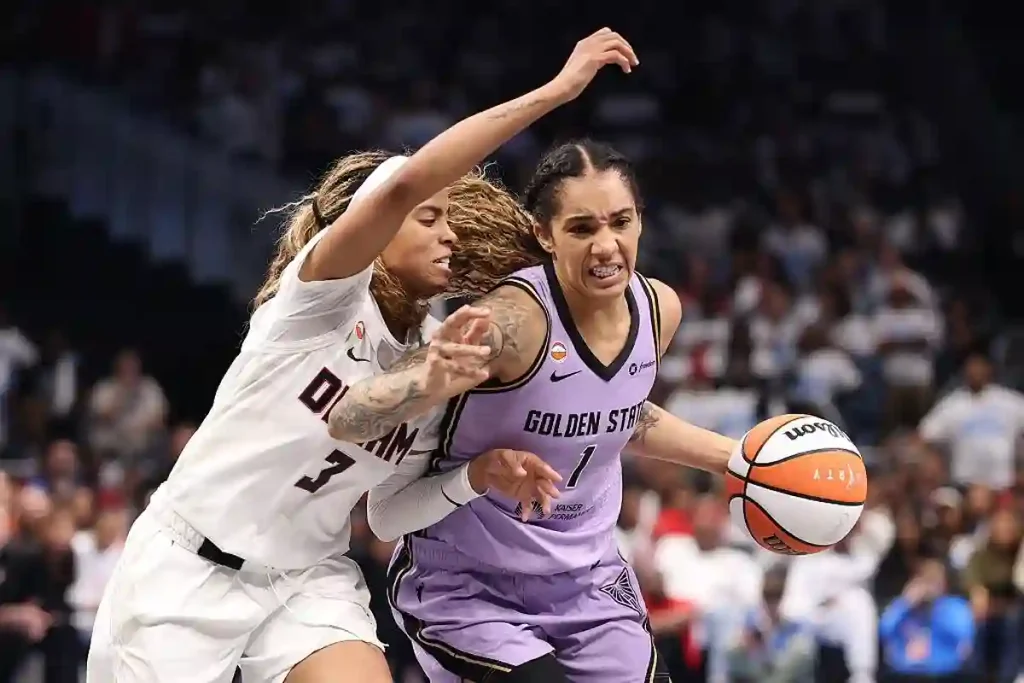
The five-point result changed the direction of the series and sent both teams back to California for Game 5. Here is a complete breakdown of the final score, individual performances, shooting numbers, team statistics, and the key moments that decided the game. wnba.com+1
WNBA Finals Game 4 Player Stats Final Score and Match Details
Final
October 24, 2026
Golden State Valkyries Scores, Stats and Highlights – ESPN
Golden State Valkyries

67
2025 Atlanta Dream Roster – WNBA | FOX Sports
Atlanta Dream

62
Venue
State Farm Arena
City
Atlanta, Georgia
Series after Game 4
Tied 2-2
Attendance
17,099
The Valkyries won the game by five points after building a 16-point halftime advantage. Atlanta made a late comeback attempt but could not complete the recovery. Across the Timeline+1
Complete WNBA Finals Game 4 Player Stats and Box Score
The individual performances reveal why Golden State controlled most of the contest despite shooting just 36.1% from the field. The Valkyries made up for their shooting struggles with strong rebounding, defensive pressure, and better ball security.
Golden State Valkyries Player Statistics
| Player | PTS | REB | AST | STL | BLK |
|---|---|---|---|---|---|
| Gabby Williams | 17 | 5 | 3 | 2 | 0 |
| Veronica Burton | 13 | 3 | 5 | 3 | 2 |
| Tiffany Hayes | 13 | 5 | 0 | 0 | 0 |
| Cecilia Zandalasini | 10 | 1 | 1 | 3 | 0 |
| Kaila Charles | 5 | 5 | 1 | 0 | 0 |
| Kiah Stokes | 4 | 16 | 0 | 0 | 3 |
| Kayla Thornton | 3 | 3 | 0 | 0 | 0 |
| Janelle Salaün | 2 | 0 | 0 | 0 | 0 |
| Kaitlyn Chen | 0 | 0 | 0 | 0 | 0 |
PTS: Points · REB: Rebounds · AST: Assists · STL: Steals · BLK: Blocks
Golden State had four players score at least 10 points. Williams led the group, while Burton and Hayes provided important offensive support. Stokes dominated the glass with 16 rebounds, including eight offensive boards. Across the Timeline+1
Atlanta Dream Player Statistics
| Player | PTS | REB | AST | STL | BLK |
|---|---|---|---|---|---|
| Rhyne Howard | 19 | 8 | 1 | 0 | 1 |
| Jordin Canada | 10 | 1 | 4 | 0 | 0 |
| Isobel Borlase | 10 | 2 | 0 | 2 | 0 |
| Angel Reese | 8 | 9 | 3 | 1 | 3 |
| Naz Hillmon | 6 | 9 | 1 | 0 | 0 |
| Allisha Gray | 5 | 5 | 0 | 0 | 2 |
| DeWanna Bonner | 4 | 3 | 0 | 1 | 0 |
| Madina Okot | 0 | 0 | 0 | 0 | 0 |
| Shatori Walker-Kimbrough | 0 | 0 | 0 | 0 | 0 |
Rhyne Howard finished as Atlanta’s leading scorer with 19 points. Canada and Borlase added 10 points apiece, but the Dream struggled to generate consistent offense across the lineup.
Reese contributed nine rebounds, three assists, and three blocks, although her scoring output was considerably lower than in the previous two games. Across the Timeline+1
Top Performers of Game 4
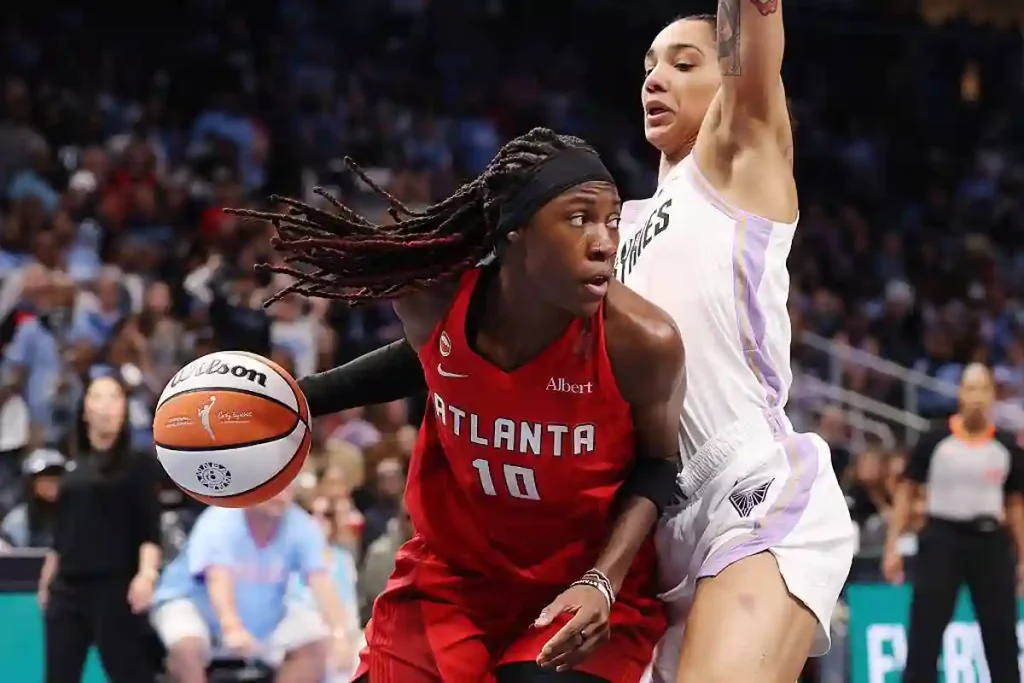
Gabby Williams Leads Golden State With 17 Points
Gabby Williams delivered the biggest scoring performance for Golden State.

She finished with:
- 17 points
- 5 rebounds
- 3 assists
- 2 steals
- 7-of-21 field goals
- 3-of-3 free throws
Williams helped the Valkyries establish their offensive rhythm, especially during the first half. Her scoring gave Golden State a reliable option as Atlanta tried to close the gap.
Although her shooting percentage was not particularly high, she remained an important part of the team’s offensive attack.
Rhyne Howard Leads All Scorers With 19 Points
Howard was Atlanta’s most productive offensive player.
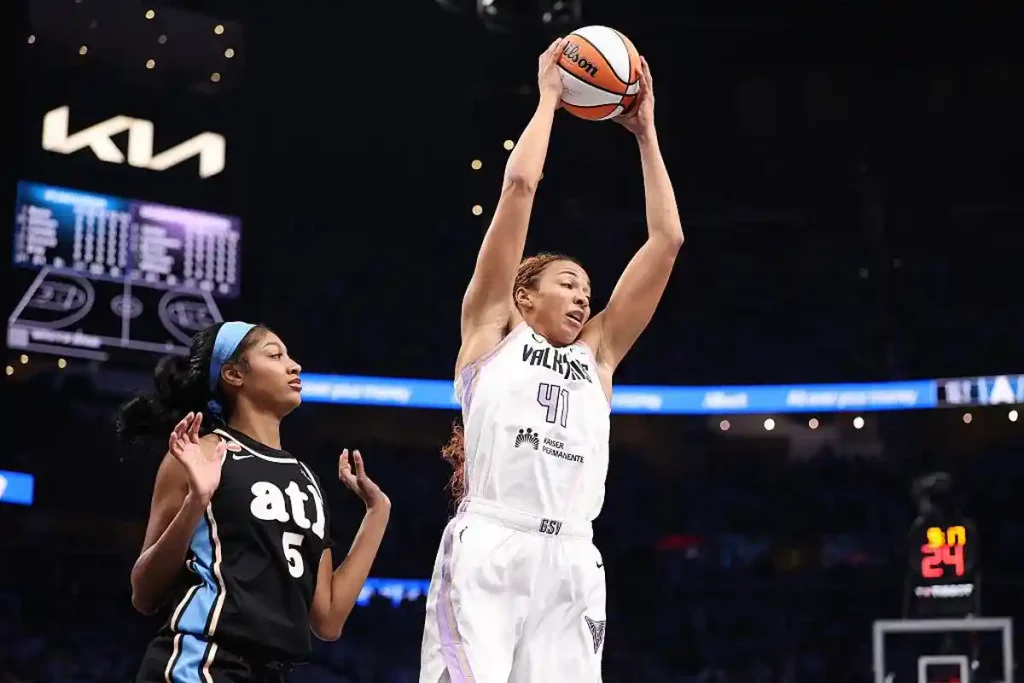
Her final numbers included:
- 19 points
- 8 rebounds
- 1 assist
- 6-of-14 field goals
- 2-of-8 three-pointers
- 5-of-7 free throws
Howard continued attacking the basket as the Dream attempted to recover from their early deficit.
She also helped create Atlanta’s late fourth-quarter comeback opportunity. Her three-point play with 28 seconds remaining brought the Dream within four points.
Despite her scoring effort, Atlanta could not get enough support from the rest of its offense.
Kiah Stokes Controls the Rebounding Battle
Stokes was one of the most important players in the game, even though she scored only four points.
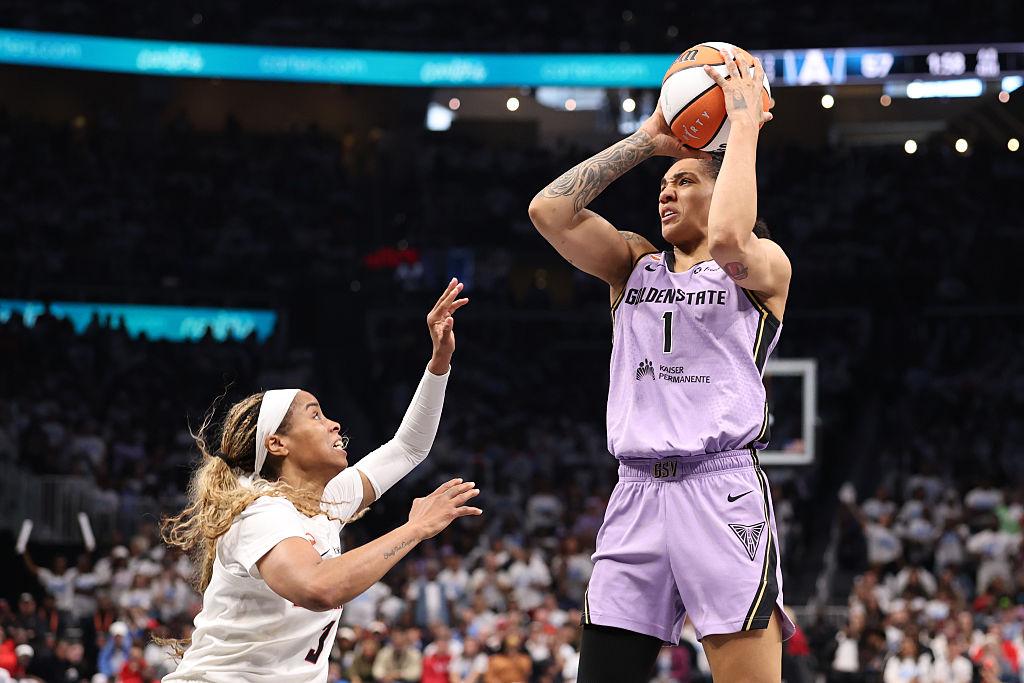
Her statistics tell a different story:
- 4 points
- 16 rebounds
- 8 offensive rebounds
- 8 defensive rebounds
- 3 blocks
Her work around the basket limited Atlanta’s second-chance opportunities while giving Golden State extra possessions.
Stokes also established a major Finals milestone. Her 14 total blocks through the first four games of the series set a new WNBA Finals record, passing the previous mark of 12 shared by Brittney Griner and Sylvia Fowles. wnba.com+1
Veronica Burton Delivers a Complete Performance
Burton contributed on both ends of the floor.
She recorded 13 points, five assists, three rebounds, three steals, and two blocks.
Her two made three-pointers were also important during the second half.
One of her biggest moments came late in the fourth quarter when she knocked down a three-pointer to stop Atlanta’s momentum. She also made a free throw in the closing seconds to help protect Golden State’s lead.
Tiffany Hayes Provides an Offensive Boost
Hayes finished with 13 points and five rebounds.
Golden State moved her into the starting lineup for Game 4, and she responded with an important scoring contribution.
She scored all 13 of her points in the second half, helping the Valkyries maintain their advantage as Atlanta attempted to fight back.
Her offensive production gave Golden State another scoring option alongside Williams and Burton.
Team Statistics and Shooting Comparison
The team numbers show that Golden State won through defensive execution and rebounding rather than superior shooting.
| Team Statistics | Golden State | Atlanta |
|---|---|---|
| Points | 67 | 62 |
| Field Goals | 26/72 | 18/54 |
| Field Goal % | 36.1% | 33.3% |
| Three-Pointers | 4/25 | 4/23 |
| Three-Point % | 16.0% | 17.4% |
| Free Throws | 11/13 | 22/31 |
| Free Throw % | 84.6% | 71.0% |
| Total Rebounds | 38 | 37 |
| Offensive Rebounds | 13 | 12 |
| Defensive Rebounds | 25 | 25 |
| Assists | 10 | 9 |
| Steals | 8 | 4 |
| Blocks | 5 | 6 |
| Turnovers | 9 | 17 |
Across the Timeline+1
Field Goal Shooting
Atlanta actually attempted 18 fewer field goals than Golden State. However, the Dream made just 18 of their 54 attempts.
Golden State converted 26 of 72 shots.
Neither team had an impressive shooting night, but the Valkyries created more opportunities through offensive rebounding and forced turnovers.
Three-Point Shooting
Three-point shooting was another difficult area for both teams.
Golden State made four of 25 attempts, while Atlanta converted four of 23.
Neither team found a consistent outside shooting rhythm.
The Valkyries still managed to win because they attacked the basket, collected offensive rebounds, and limited Atlanta’s scoring opportunities.
Free Throw Performance
Atlanta had a significant advantage in free throw attempts.
The Dream attempted 31 free throws and made 22. Golden State went 11-for-13 from the line.
However, Atlanta’s lower conversion rate meant that several opportunities went unused.
Those missed free throws mattered in a game decided by only five points.
Turnovers and Defensive Pressure
Turnovers were among the biggest differences between the teams.
Golden State committed nine turnovers, compared with 17 for Atlanta.
The Valkyries also recorded eight steals, twice Atlanta’s total of four.
By protecting possession and putting pressure on opposing ball handlers, Golden State reduced the number of easy scoring opportunities available to the Dream.
Quarter-by-Quarter Score
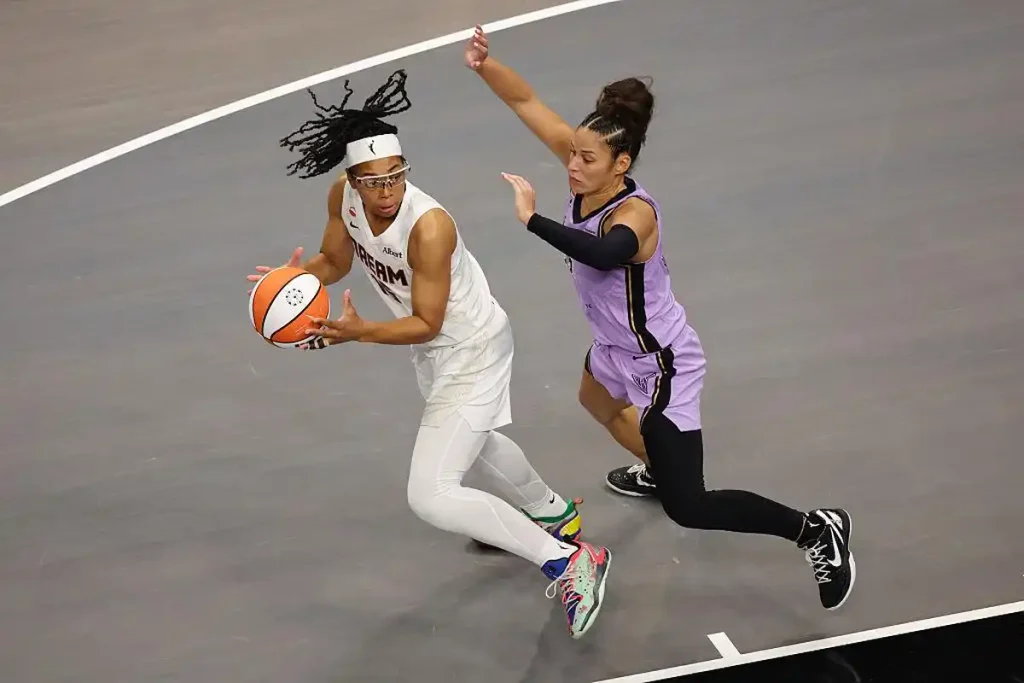
The game had two different stories. Golden State controlled the first half, while Atlanta improved after halftime.
| Quarter | Golden State | Atlanta |
|---|---|---|
| First | 16 | 11 |
| Second | 26 | 15 |
| Third | 12 | 19 |
| Fourth | 13 | 17 |
| Final | 67 | 62 |
Across the Timeline+1
First Quarter: Golden State Takes Control
The Valkyries opened the game with strong defensive pressure.
They started with a 12-0 run, making it difficult for Atlanta to establish its offense.
The Dream eventually found some scoring opportunities, but Golden State finished the opening quarter with a 16-11 advantage.
Second Quarter: Valkyries Build a 16-Point Lead
The second quarter was Golden State’s best stretch.
Williams continued scoring, while Cecilia Zandalasini added important baskets.
The Valkyries closed the half with a strong 18-6 run, extending their advantage to 42-26.
Atlanta struggled to find good shots and had difficulty dealing with Golden State’s defensive intensity.
The 16-point halftime deficit was the largest Atlanta had faced during the playoffs.
Third Quarter: Atlanta Starts Its Comeback
The Dream came out with greater urgency after halftime.
Howard helped generate offense, while Atlanta improved its defensive pressure.
The Dream won the third quarter 19-12, cutting the deficit to nine points.
However, Golden State avoided a complete collapse and entered the final period with a 54-45 lead.
Fourth Quarter: Valkyries Survive the Late Pressure
Atlanta continued fighting in the fourth quarter.
Howard’s scoring helped bring the Dream within six points during the final minutes.
A three-pointer from Burton briefly pushed Golden State’s advantage back up.
Howard then completed a three-point play with 28 seconds remaining, making it a four-point game.
Burton made one of two free throws, and Atlanta could not complete another scoring possession.
Golden State secured the 67-62 victory. wnba.com+1
Why Did the Golden State Valkyries Win Game 4?
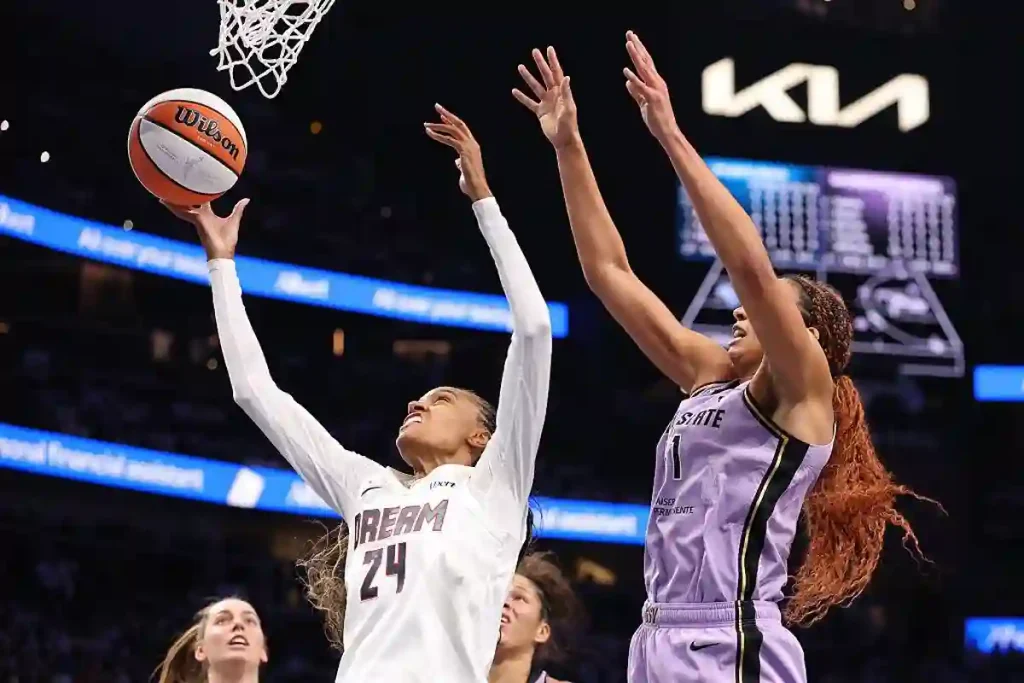
Golden State did not dominate every statistical category. In fact, Atlanta had more free throw attempts and slightly more blocks.
However, several important factors helped the Valkyries secure the victory.
1. Better Ball Security
The difference between nine and 17 turnovers was significant.
Golden State avoided giving Atlanta too many easy opportunities.
The Dream, meanwhile, struggled to maintain possession under defensive pressure.
2. Kiah Stokes Dominated the Glass
Stokes collected 16 rebounds, including eight offensive boards.
Her performance helped Golden State win the overall rebounding battle 38-37.
Those extra possessions were particularly valuable because neither team shot efficiently.
3. Strong First-Half Defense
Golden State allowed only 26 points in the first half.
The Valkyries challenged shots, protected the paint, and prevented Atlanta from building offensive momentum.
That defensive performance created the foundation for the victory.
4. More Balanced Scoring
Williams scored 17 points, while Burton and Hayes each added 13.
Zandalasini contributed another 10.
Atlanta had three players reach double figures, but Golden State received better scoring support from its rotation.
5. Better Response to Atlanta’s Comeback
The Dream improved after halftime and reduced the deficit.
However, Golden State made important plays when the pressure increased.
Burton’s late three-pointer and Stokes’ defensive presence helped the Valkyries maintain control.
Angel Reese’s Performance in Game 4
Angel Reese entered the contest after delivering two dominant performances for Atlanta.
She had averaged 25.5 points and 14 rebounds across the previous two Dream victories.
Game 4 was a different challenge.
Her final numbers were:
| Statistic | Angel Reese |
|---|---|
| Points | 8 |
| Rebounds | 9 |
| Assists | 3 |
| Steals | 1 |
| Blocks | 3 |
| Field Goals | 2/12 |
| Free Throws | 4/6 |
| Turnovers | 6 |
Reese struggled to convert her shots, making only two of 12 field goal attempts.
Golden State challenged her attempts near the basket and made it harder for her to find comfortable scoring positions.
She still contributed nine rebounds, three assists, and three blocks.
Her six turnovers were another problem for Atlanta.
The difference between her previous scoring performances and this outing was one of the biggest talking points after the game.
What Changed From Game 3 to Game 4?
Golden State entered Game 4 after suffering a 26-point defeat in Game 3.
The Valkyries needed a different approach, especially on defense and around the basket.
They responded with several adjustments.
| Area | Game 4 Improvement |
|---|---|
| Defense | Limited Atlanta to 62 points |
| Turnovers | Reduced mistakes to nine |
| Rebounding | Collected 38 total rebounds |
| Interior Defense | Stokes recorded three blocks |
| Scoring | Four players reached double figures |
| Second Chances | Collected 13 offensive rebounds |
The Valkyries also made changes to their starting lineup.
Tiffany Hayes and Kaila Charles entered the starting group in place of Kayla Thornton and Cecilia Zandalasini.
Although Thornton and Zandalasini came off the bench, both contributed during important stretches.
The lineup adjustment helped Golden State establish better balance and respond to Atlanta’s physical play. wnba.com+1
What Did the Game 4 Result Mean for the WNBA Finals?
The victory was important because it prevented Atlanta from taking a commanding 3-1 lead.
Instead, the series became tied at 2-2.
That result shifted the pressure back to both teams.
Golden State gained confidence after responding to two consecutive defeats, while Atlanta had to regroup after missing an opportunity to move within one victory of the championship.
Game 5 was scheduled for October 26 in California.
The series remained a best-of-seven championship matchup, meaning the first team to win four games would claim the title.
For Golden State, the main objective was to carry its defensive improvement into the next game.
For Atlanta, improving its shooting and reducing turnovers became important priorities.
Game 4 Player Stats and Historical Significance
Several individual performances from this game deserve attention beyond the final score.
Gabby Williams’ scoring: Her 17 points made her Golden State’s leading scorer and provided the offensive production the team needed.
Kiah Stokes’ rebounding: Her 16 rebounds helped Golden State control extra possessions and set a new Finals blocks record across the first four games.
Rhyne Howard’s scoring: Her 19 points made her the game’s top scorer, even though Atlanta finished on the losing side.
Angel Reese’s difficult shooting night: Her eight points marked a major change from her dominant performances in the previous two games.
Veronica Burton’s all-around contribution: Her points, assists, steals, and blocks demonstrated her value on both ends of the court.
Together, these performances made Game 4 an important turning point in the 2026 championship series.
Frequently Asked Questions on WNBA Finals Game 4 Player Stats
Who won WNBA Finals Game 4 in 2026?
The Golden State Valkyries defeated the Atlanta Dream 67-62 on October 24, 2026, at State Farm Arena.
How many points did Gabby Williams score in Game 4?
Gabby Williams scored 17 points for Golden State. She also recorded five rebounds, three assists, and two steals.
Who was the leading scorer in Game 4?
Rhyne Howard of Atlanta led all players with 19 points. Gabby Williams led Golden State with 17.
How many points did Angel Reese score?
Angel Reese scored eight points and collected nine rebounds. She also recorded three assists and three blocks.
How many rebounds did Kiah Stokes have?
Kiah Stokes recorded 16 rebounds, including eight offensive rebounds. She also finished with three blocks.
What was the halftime score?
Golden State led Atlanta 42-26 at halftime, giving the Valkyries a 16-point advantage.
How many turnovers did Atlanta commit?
Atlanta committed 17 turnovers, compared with nine by Golden State.
What was the series score after Game 4?
The series was tied 2-2 after Golden State won Game 4.
Where was WNBA Finals Game 4 played?
The game took place at State Farm Arena in Atlanta, Georgia, with an announced attendance of 17,099.
Who had the most rebounds in Game 4?
Kiah Stokes led all players with 16 rebounds for the Golden State Valkyries.
What was Golden State’s three-point shooting percentage?
The Valkyries made four of 25 three-point attempts, finishing at 16%.
Why was Game 4 important for Golden State?
The victory prevented Atlanta from taking a 3-1 series lead. Golden State tied the championship series at 2-2 and regained home-court momentum.
Final Thoughts on WNBA Finals Game 4 Player Stats

The WNBA Finals Game 4 player stats show how Golden State used defense, rebounding, and ball security to earn a valuable championship victory.
Gabby Williams led the scoring with 17 points, Veronica Burton and Tiffany Hayes added 13 each, and Kiah Stokes controlled the paint with 16 rebounds and three blocks.
Atlanta received 19 points from Rhyne Howard, but Angel Reese’s difficult shooting night and the team’s 17 turnovers made the comeback harder.
The Valkyries finished with a 67-62 victory, tying the series at 2-2 and keeping their championship hopes alive.
For basketball fans, this game demonstrated how defensive execution and contributions from multiple players can decide a Finals matchup, even when neither team shoots particularly well.

Logan Carter writes straightforward sports guides to help fans find NFL game times, TV channels, and streaming options. He makes sports information easy to understand so readers can spend less time searching and more time enjoying the game.
1 thought on “WNBA Finals Game 4 Player Stats 2026”